
If your goal is short, shareable slow-motion video that guests text to friends before dessert is served, a 360 photo booth wins. If your goal is a tangible keepsake guests tuck into a wallet or pin on a fridge, a traditional photo booth wins. Costs, footprint, and staffing differ between the two, and we break down each so you can match the right booth to your event goal.
TL;DR:
- Standard packages start at $1,295 for a 360 booth and $900 for a traditional booth; guest count, rental duration, extras, and travel affect final quotes.
- A 360 setup needs a clear circular area, ceiling clearance, even lighting, and nearby power, plus 60 to 90 minutes each for setup and teardown.
- Traditional open air booths move slightly faster because they skip rotation, while 360 booths process small groups in cycles and need close attendant supervision.
- For larger events, separate both stations and assign two attendants; pairing a 360 booth with a compact print station reduces space and cost.
Table of Contents
- What a 360 photo booth does
- What a traditional photo booth does
- 360 vs photo booth: comparing guest experience side by side
- Space, setup, and logistics for each booth type
- Cost: typical pricing ranges and what’s included
- Can you have both or hybrid setups?
- How to choose: a decision checklist for event hosts
- Why work with an experienced local provider
- Typical customization and branding options for each booth type
- Staffing and operational support: what differs
- Which booth is right for your event: our take
- Let us bring the right booth to your celebration
- FAQ
- Sources
What a 360 photo booth does
A 360 booth uses a rotating arm or motorized platform that spins a camera around one or more guests standing on a riser, capturing a short slow-motion vertical clip suitable for sharing on social media. The format is built for phones first, which makes it a natural fit for TikTok and Instagram Reels.
Guest flow is simple: step onto the platform, strike a pose or move through a few beats as the arm sweeps around, then receive the finished clip within seconds. Delivery usually happens through SMS, a QR code, or a shareable online gallery, so guests can post before they leave the step-and-repeat area.
Software platforms built for this format, including Curator Live, support dedicated 360 device modes alongside branded overlays and multiple delivery channels like SMS, email, and QR, which gives hosts flexibility in how the final video looks and travels.
- Clips run several seconds in vertical, social-ready format.
- Delivery happens through SMS, QR code, or an online gallery.
- Add-ons commonly include music tracks, overlays, and green-screen backgrounds.
- The novelty factor tends to draw a visible line and a crowd.
What a traditional photo booth does
Traditional photo booths come in three common builds: open-air setups with a stand-alone camera and backdrop, mirror booths with a touchscreen mirror interface, and enclosed cabin booths that curtain guests off for a more private session. Each changes how guests interact. Open-air booths fit larger groups and props easily, mirror booths add a playful, interactive touchscreen element, and enclosed booths suit couples or small groups who want a classic, private moment.
Outputs center on stills: instant printed strips or 4×6 prints handed to guests on the spot, plus high-resolution digital copies and, on many platforms, GIFs or boomerangs when that mode is enabled. The Photo booth entry on Wikipedia traces the format back to automated image-capture kiosks, and that printed-keepsake tradition is still the core appeal.
A physical print is something a guest can hold, sign, or slide into a scrapbook before the night ends, which makes traditional booths a strong fit for multigenerational crowds or any event where a tangible souvenir matters more than a social post.
- Open-air, mirror, and enclosed formats each suit a different group size and privacy level.
- Instant prints give guests something physical to take home.
- High-resolution digital files are usually included alongside prints.
- Props, custom print templates, and a guestbook turn strips into lasting scrapbook pages.
360 vs photo booth: comparing guest experience side by side
Guest engagement differs by what people value. A 360 booth trades on novelty and motion, the kind of moment that earns a laugh and a quick post. A traditional booth trades on the keepsake, the print a guest actually keeps. Neither is better across the board; each wins on a different metric.

Throughput also varies. A 360 booth typically processes one small group at a time through a full rotation cycle, which can mean a steady but moderate pace during peak hours. A traditional open-air booth tends to move slightly faster per group since there is no rotation sequence, though both slow down when props and posing take longer than expected.
Output delivery is where the formats diverge most clearly. A 360 clip is built for an immediate share: guests have it on their phone within moments. A traditional booth hands over a printed strip on the spot, with a digital copy following by email or gallery link, which favors guests who want something to hold rather than something to post instantly.
Branding and reach also work differently. Both formats support on-screen logos and branded overlays, but a 360 clip’s vertical video format is optimized for social platforms, giving a sponsor logo or event hashtag more visibility when guests repost it.
- Guest experience: novelty and motion (360) versus a physical souvenir (traditional).
- Throughput: steady group-by-group pacing for 360, slightly quicker single-shot sessions for traditional.
- Delivery: instant digital clip (360) versus instant print plus digital follow-up (traditional).
- Branding: both support overlays, but 360’s vertical video travels further on social feeds.
Space, setup, and logistics for each booth type
A 360 booth needs a clear circular footprint, typically enough room for the rotating arm to swing freely plus a buffer for guests waiting nearby, and most setups need adequate ceiling clearance depending on the arm’s height. A traditional booth needs less clearance overall since nothing rotates, just enough backdrop depth and side space for props.
Lighting matters more for 360 booths because the camera captures continuous motion from every angle, so even, shadow-free lighting across the full circle keeps the video sharp. Traditional booths can often rely on a single well-placed light or flash since the camera faces one direction.
- Confirm floor space and ceiling height with the venue before booking a 360 booth.
- Schedule power access near the booth location; most setups need a standard outlet.
- Ask whether an attendant will supervise the rotating platform for guest safety.
- Build in 60 to 90 minutes for setup and a similar window for teardown.
Pro Tip: Walk the venue floor plan with your vendor beforehand so footprint, power, and lighting are settled before event day.
Our venue preparation checklist covers coordination details worth confirming with your venue manager ahead of time.
Cost: typical pricing ranges and what’s included
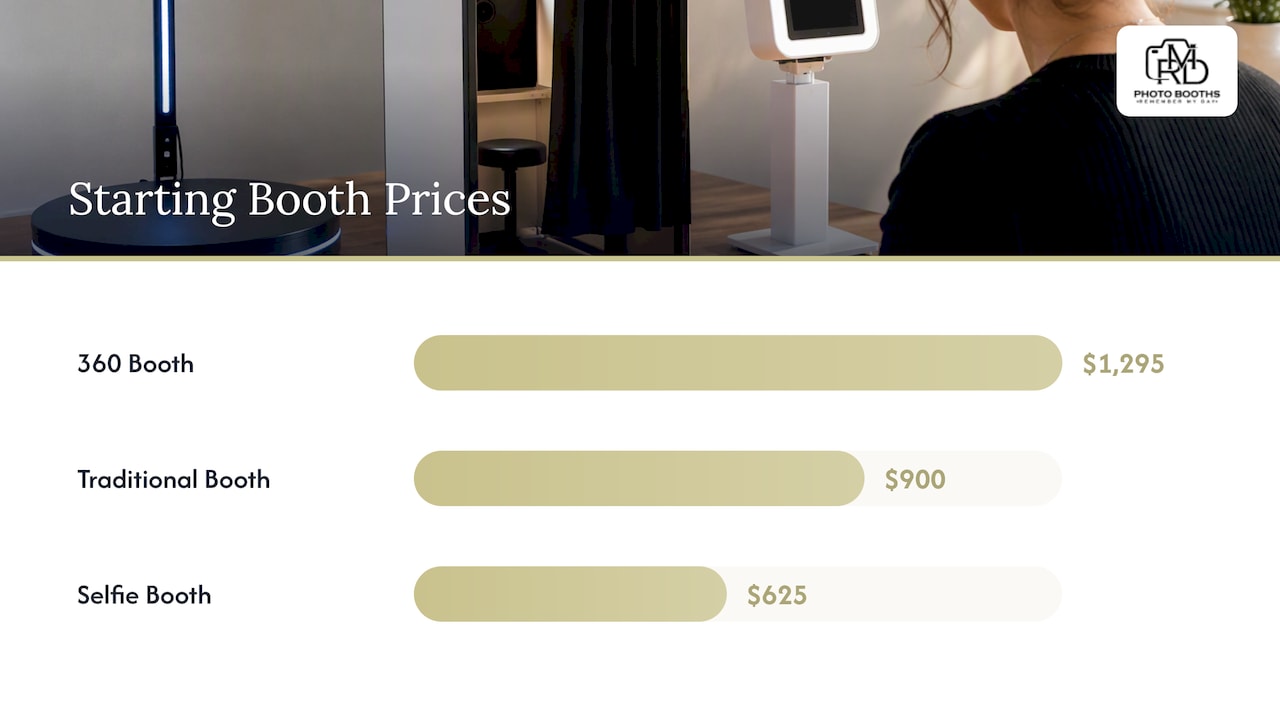
Pricing for both booth types varies by event duration, guest count, and how many branded extras you add. A 360 Booth from our lineup starts at $1,295 for a standard package, while a Traditional Booth starts at $900. A Selfie Booth, a simpler digital-only option, starts at $625.
Most packages include an on-site attendant, props, a chosen delivery method (prints, digital gallery, or both), a branded overlay, and setup and breakdown time built into the booking window. Travel fees can apply outside a vendor’s standard service radius.
Platforms supporting both photo and video capture modes, like Pictor, now combine stills, GIFs, boomerangs, and 360 video in one system, which is reshaping how package inclusions are bundled. That flexibility means some vendors can offer hybrid deliverables within a single flat rate rather than charging separately for each mode.
- Guest count and event duration are the biggest cost drivers for either booth type.
- Branded overlays and custom print templates add to a base package price.
- Travel distance from the vendor’s home base can affect the quote.
- Shortening the rental block or trimming add-ons is the simplest way to manage cost.
Can you have both or hybrid setups?
Running both booths at one event gives guests a choice: grab a quick video moment at the 360 booth, then stop by the traditional setup for a printed strip to take home. Larger weddings and corporate galas with enough floor space often do exactly this.
Logistically, space both stations apart so lines do not merge, and plan for two attendants rather than one covering both. Budget-wise, running both usually only makes sense for events with enough guest count and hours to justify two rental fees. For a lighter alternative, pair a 360 Booth with a small print station rather than a full traditional booth setup, which keeps footprint and cost down while still offering guests a choice.
- Separate stations reduce line crowding and confusion.
- Two attendants keep both experiences running smoothly.
- A full dual setup suits larger budgets and longer event windows.
- A 360 booth plus a compact print station is a lighter hybrid option.
How to choose: a decision checklist for event hosts
Start with four questions: Who is your audience, and how social-media active are they? How much floor space and ceiling clearance does your venue offer? What is your budget per guest hour? Do you want guests to leave with a print, a video, or both?
- If your crowd is younger and social-first, lean toward a 360 Booth.
- If your guests span generations and value a physical souvenir, choose a Traditional Booth.
- If your venue has tight ceiling clearance, a traditional open-air setup is the safer fit.
- If budget allows and the guest list is large, consider both booths side by side.
A wedding with an older guest list often leans traditional for the keepsake value, a corporate launch party aimed at social buzz often leans 360, and a kids’ birthday party usually favors a simple, fast open-air booth that keeps the line moving.
Pro Tip: Before booking, ask your vendor about setup timing, exact deliverables, staffing on the day, and whether they carry event insurance.
Why work with an experienced local provider
Choosing a vendor with a track record matters as much as choosing the booth type. We offer a wide range of experiences, from the Selfie Booth to the Glambot®, all bookable through a straightforward online process.
An experienced operator keeps lines moving, supervises rotating platforms safely, and tests branded overlays before guests ever step up. When you book with us, expect an attendant on-site for the full rental window, equipment tested ahead of time, and a contingency plan if something needs a quick fix mid-event.
- Over 1,000 five-star reviews across thousands of booked events.
- A range of booth styles bookable through one online platform.
- On-site attendants trained to run rotating platforms safely.
- Tested overlays and branding before the event starts.
Typical customization and branding options for each booth type
Both booth types support branded overlays, but the details differ. A 360 Booth typically layers a logo or event name directly onto the final video, often paired with a custom music track and sometimes a green-screen background that swaps in a themed backdrop digitally. Vendors running platforms like Curator Live can apply these overlays automatically as each clip renders, so no manual editing slows down delivery.
A Traditional Booth leans on print template design: custom borders, event dates, monograms, or sponsor logos printed directly on the strip or 4×6, plus physical props and themed backdrops that guests interact with in person. Our design template page shows the range of print layouts available for weddings, corporate events, and parties.
Both formats can carry a consistent color scheme or hashtag across prints and video, which matters for corporate activations where brand recognition is the point. The key difference is where the branding lives: baked into a shareable video for 360, or printed on a keepsake guests carry home for traditional.
Staffing and operational support: what differs
A 360 booth generally needs closer supervision because a rotating platform involves moving parts and guests need brief instruction on where to stand and how long to hold a pose. Most vendors staff these with a dedicated attendant for the entire rental window, partly for guest safety and partly to keep the queue moving efficiently.
A traditional booth, especially an open-air or enclosed cabin style, usually needs lighter supervision since there is no moving camera arm. One attendant can often manage props, restock the printer, and troubleshoot the touchscreen without the same safety considerations a rotating platform requires.
Both setups benefit from an attendant who tests equipment before guests arrive and stays reachable throughout the event for prop refreshes, paper jams, or overlay adjustments. The staffing difference is less about total headcount and more about what that staff member is watching: guest positioning and platform safety for 360, print quality and prop turnover for traditional.
Which booth is right for your event: our take
The rule of thumb we come back to again and again: match the booth to what your guests will actually do with the output. If they’re posting before the cake is cut, a 360 Booth earns its spot. If they’re building a scrapbook, a Traditional Booth wins every time. Check availability for your date and let the guest experience guide the choice.
— RMD
Let us bring the right booth to your celebration
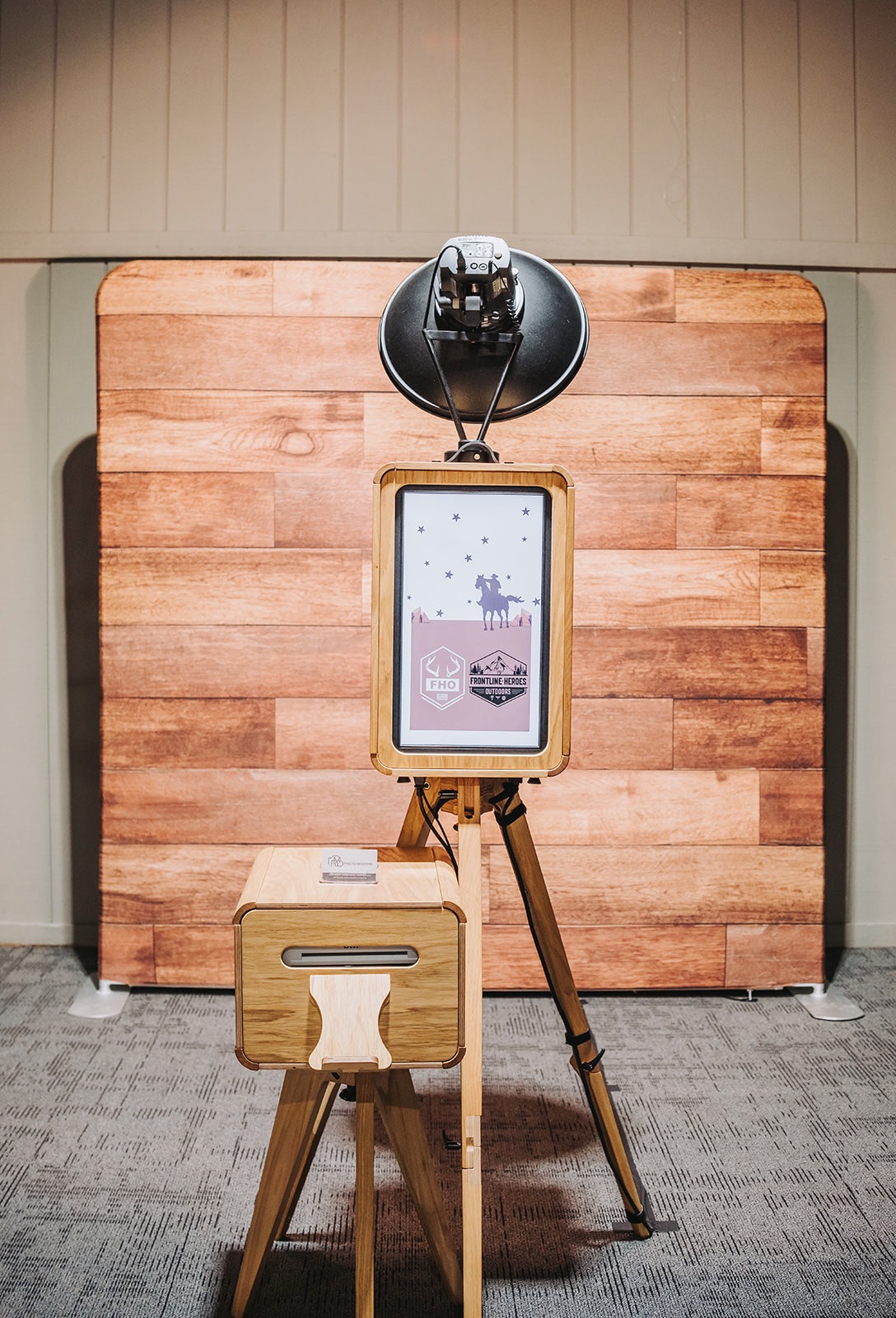
Whichever format fits your event, we offer both as polished, ready-to-book experiences. Our 360 Booth delivers the slow-motion, social-ready clips guests love sharing, while our Traditional Photo Booth hands guests a printed keepsake before they leave the dance floor.
Booking takes just a few steps through our online platform: pick your experience, choose your date and add-ons, and we handle attendant staffing, props, and branded overlays from there. Planning a themed backdrop or vision board first can help shape your overlay design, and resources like DressMeUpNY’s vision board guide are a handy starting point for weddings and Quinceañeras.
- Browse all experiences to compare booth types side by side.
- Reserve your date directly on our booking page.
- Reach out with questions about staffing, setup, or branding before you commit.
Ready to lock in your date? Book now and we will handle the rest.
FAQ
What is a 360 photo booth?
A 360 photo booth uses a rotating arm or motorized platform to capture a short, slow-motion video of guests standing on a riser, typically producing a 10 to 15 second vertical clip. It is built for quick sharing to social platforms like Instagram Reels and TikTok.
Do you need a license to run a photo booth?
Licensing requirements depend on local business regulations and typically relate to general business operation rather than a photo-booth-specific permit. It is worth confirming with your vendor that they carry proper business registration and event insurance before booking.
How much does a 360 photo booth cost to hire?
Pricing varies by package and add-ons, but a 360 Booth from our lineup starts at $1,295 for a standard event package. Final cost depends on event duration, branding customizations, and travel distance.
Is photo booth one word or two?
Photo booth is typically written as two words in American English, though you will sometimes see it spelled as one word informally. The Photo booth entry on Wikipedia uses the two-word spelling as the standard term.
Sources
Recommended
- Digital vs Traditional Booths: Which Is Right for Your Event?
- Top Photo Booth Trends 2026: 45% Higher Guest Engagement
- Traditional Photo Booth
- Types of Customizable Booth Packages for Your Event
This article was created with the assistance of automated AI content tools using publicly available information and may contain errors, omissions, or outdated information. Content is provided for general informational purposes only and does not represent an endorsement, criticism, or official statement regarding any person, business, product, or service mentioned. Business details, pricing, services, availability, and other information may change over time. If you believe any information is inac