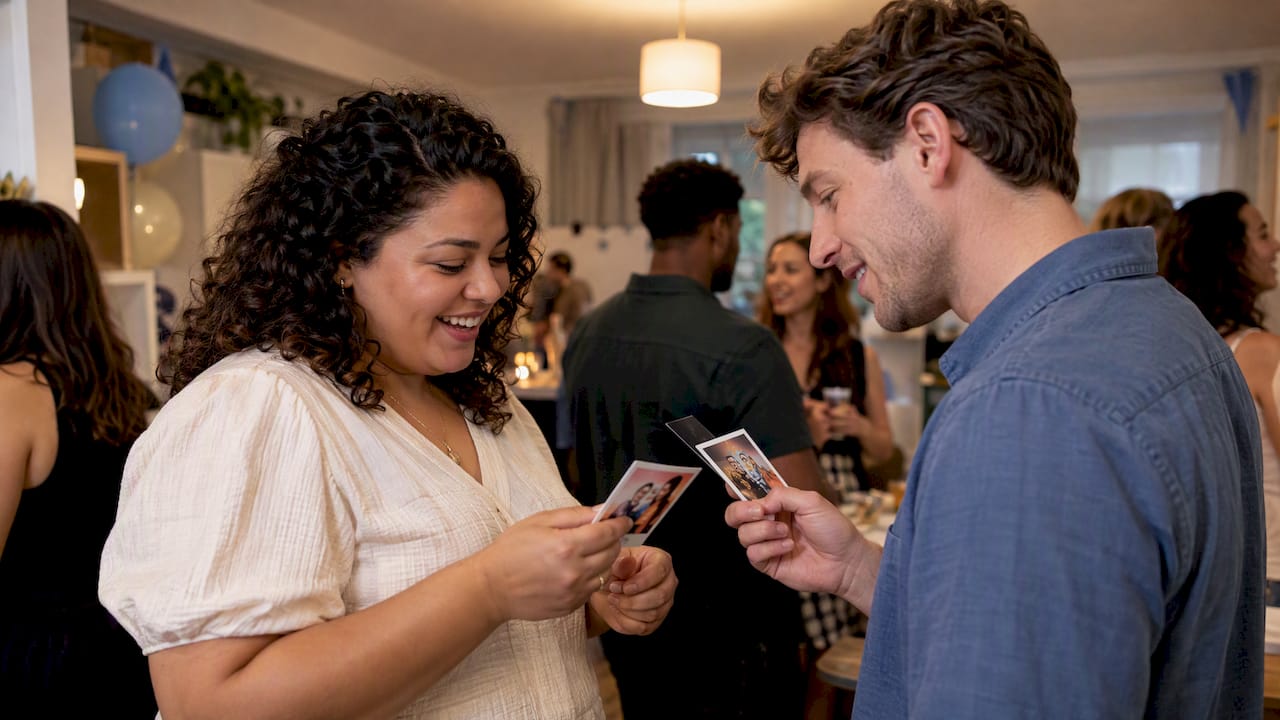
The most effective trading-card favors from a photo booth are personalized collectible-style cards that pair a bold portrait with a clear name and headline, two or three playful stats, and subtle event branding. This approach works because it turns a single photo into a keepsake guests actually want to hold onto, and it opens the door to upsells like keychains and foil finishes. Below, we walk through the template ideas, customization rules, and production steps that make it happen.
TL;DR:
- Match full-size cards to sit-down weddings or dinners, and choose keychains for conventions and children’s parties where durable, portable favors suit busy crowds.
- Use three stat fields, high contrast, and a sample printed on the actual stock to catch color or crop problems before guests arrive.
- A touch screen or form completed before the event can collect names, nicknames, and taglines, while previews reduce typing and keep lines moving.
- RMD’s Trading Cards experience starts at $1,995, while its Key Chains option starts at $895; final pricing depends on guest count, event duration, and upgrades.
Table of Contents
- Template ideas you can put to work right away
- Getting the layout, type, and color right
- Print sizes, materials, and keychain options
- How printing actually flows during the event
- Packaging, pricing, and upsell ideas
- Keeping your templates on-brand across every card
- Mistakes that quietly ruin a good template
- Where fresh template ideas come from
- RMD Photo Booths: what our events taught us about winning trading-card templates
- How we bring trading-card favors to your event
- FAQ
- Sources
Template ideas you can put to work right away
Picking the right template starts with matching the visual concept to the event, not the other way around. Here are the concepts that show up again and again across weddings, corporate parties, and family celebrations.
- Superhero kid cards: bold comic-style borders with the child’s name as a “hero title” and stats like Bravery and Imagination, perfect for birthday parties and family fun days.
- MVP player cards: sports-card layout with jersey-style numbers, a team name field, and stats like Hustle or Clutch Factor, a favorite for sports banquets and fantasy league nights.
- Wedding VIP cards: elegant serif typography, the couple’s monogram, and a “Guest of Honor” tagline, ideal as a sit-down dinner favor or guest book alternative.
- Corporate badge cards: clean sans-serif fonts, company logo placement, and a job-title field, built for conferences and team-building events.
- Comic strip panel cards: a three-panel layout showing the guest in different poses, great for brand activations that want a playful, scroll-stopping favor.
- Retro collectible cards: faded color palettes and vintage borders reminiscent of classic sets, a strong fit for throwback-themed parties.
- Influencer promo cards: social handle field, a QR code linking to an event hashtag, and bold graphic accents, suited to brand launches and influencer meetups.
- Baby shower keepsake cards: soft pastel palettes, a “Welcome Baby” headline, and a guess-the-due-date stat field, a sweet favor for the parents to keep.
- Cosplay and convention badge cards: character name fields, fandom icons, and a power-level stat bar, a natural match for fan conventions.
- Anniversary “then and now” cards: split-frame layout comparing an old photo to a fresh booth shot, memorable for milestone anniversary parties.
- Branded sponsor cards: sponsor logo on the back, a product tagline, and a call-to-action field, popular for trade shows and product launches.
- Photo-strip hybrid cards: a classic strip of three small photos alongside a stat block, bridging nostalgia with the collectible format.
Full-size cards suit sit-down formats like weddings and corporate dinners, where guests have time to admire the layout, while keychain versions work best for high-traffic events like conventions and kids’ parties where guests want a quick, durable souvenir to clip on a bag.
Getting the layout, type, and color right
A template only works if it reads clearly at arm’s length and prints cleanly under event lighting. A few technical choices make the difference between a card that looks professional and one that looks rushed.
- Crop headshots tight at the shoulders for single-guest cards, and leave extra margin around group shots so no one gets cut off at the edges.
- Keep name text at a minimum size that stays legible when printed small, and reserve the boldest weight for the headline, not the stats.
- Use high-contrast color pairings and keep brand colors to accents rather than full backgrounds, since thin strokes and fine details tend to disappear once a card leaves the printer.
- Collect personalization fields through a kiosk touch screen for speed, or a short pre-event RSVP form when hosts want guest nicknames ready in advance.
- Run a test print before doors open and check margins and color accuracy against the approved template.
Pro Tip: Print one sample card on the actual event paper stock the morning of, not just on a laptop screen, since colors often shift once ink meets a glossy or matte finish.
Print sizes, materials, and keychain options
The format you choose should match how long guests will keep the card and how it travels home. A standard card size works well for display or a wallet, a mini card suits party favor bags, and a keychain insert turns the photo into something guests carry daily.
- Heavy card stock: affordable and quick to print, best for standard-size keepsakes handed out at the event.
- Laminated paper: adds a light protective layer, useful for mini cards that will get passed around.
- PVC or plastic: more durable than paper, a good choice when a card needs to survive a purse or backpack for months.
- Acrylic keychain inserts: the sturdiest option, ideal when the keychain itself is the main favor rather than an add-on.
Finish choice matters too. Gloss makes colors pop and photos look vibrant, matte reduces glare and feels more premium, and spot UV highlights a logo or headline without overwhelming the photo. Confirm your printer handles the chosen stock weight before the event, since some compact photo printers struggle with thicker PVC blanks.
How printing actually flows during the event
A smooth guest experience depends on a tested sequence, not improvisation. Here is the workflow that keeps lines moving and cards looking consistent from the first guest to the last.
- Run a pre-event checklist: test prints, paper and ink supply counts, and a final template review against the host’s approved design.
- Guide guests through capture, a short survey for name and stat fields, a live preview screen, and automatic template fill before the print command fires.
- Expect a steady printer cadence once the line is moving, and assign one operator to manage the booth while a runner restocks paper and ink.
- Keep a backup template and a spare printer cable on hand, and tell the host upfront what turnaround guests can expect if a line forms.
Pro Tip: Assign a single team member to watch the printer queue during peak hours, since a jammed printer left unnoticed for even a few minutes can back up an entire line.
Guest-facing personalization tools, like a survey-to-template workflow that collects a name, nickname, and tagline and auto-fills them into the card, cut down on the manual typing that slows a line.
Packaging, pricing, and upsell ideas
Pricing a trading-card favor well means giving hosts clear tiers rather than one flat number. A per-print rate works for smaller gatherings, while a per-guest bundle simplifies budgeting for larger weddings and corporate events.
- Offer a base per-print rate, then a bundled per-guest package that includes one card and one keychain for better per-unit value.
- Add high-margin upsells like foil accents, double-sided printing, or a sponsor logo on the card back.
- Present favors in branded sleeves or a small display rack so the cards feel like a collectible set rather than a loose stack.
- Walk hosts through options by showing a sample card alongside the keychain version, so the value difference is visible rather than explained.
Keeping your templates on-brand across every card
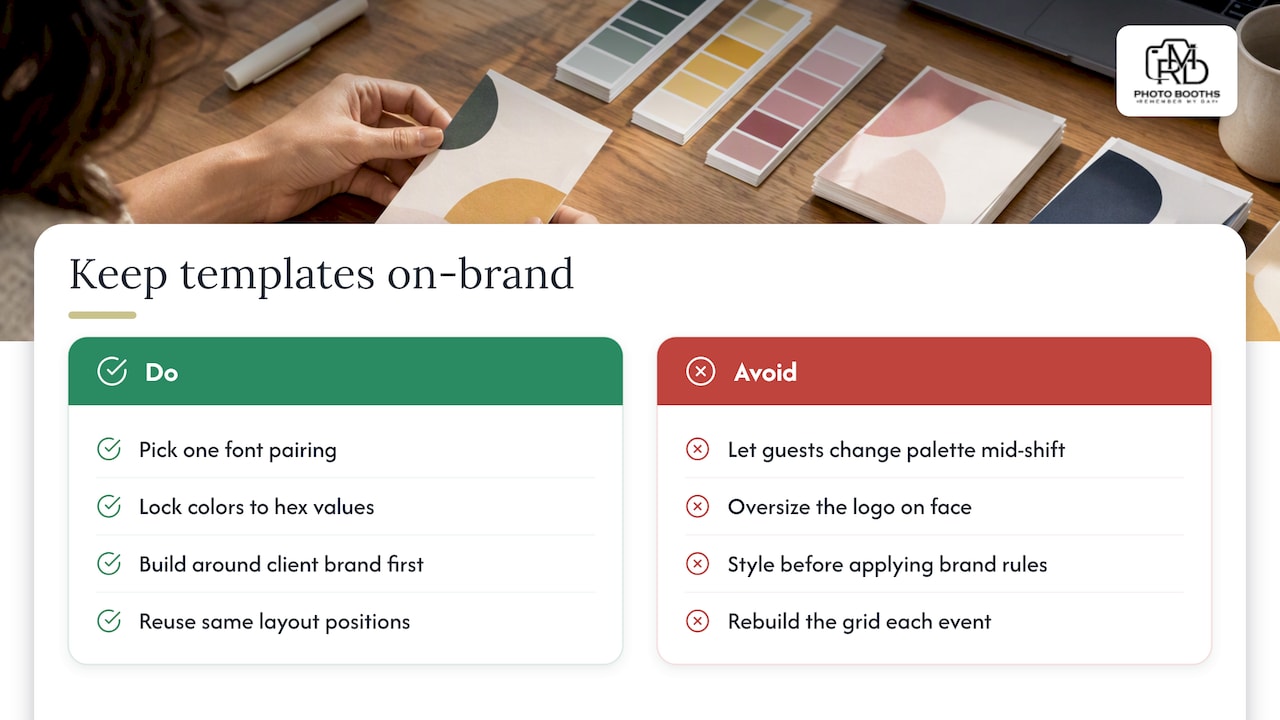
Consistency is what turns a stack of individual prints into a cohesive keepsake set. Pick one font pairing, one color palette, and one logo placement, then apply them across every template variation you offer for that event, whether it is a full-size card or a keychain insert.
Lock your brand colors to a small set of hex values before the event, and avoid letting a well-meaning guest request pull the palette off course mid-shift. If a corporate client has brand guidelines, build the template around their colors and logo first, then layer in the fun stat fields and headline styles around that frame rather than the reverse.
Reusing a layout structure across event types, same headline position, same stat block location, same QR code corner, also speeds up setup time since your team can swap colors and copy without rebuilding the grid from scratch. Keep logo sizing modest on the card face itself: a small, well-placed mark reads as polished, while an oversized logo competes with the photo for attention and can make the card feel like an ad rather than a keepsake.
Mistakes that quietly ruin a good template
A few recurring errors show up across events, and most are avoidable with a quick review before doors open. Overcrowding the card with too many stat fields is the most common one: three fields read as fun and collectible, six fields read as cluttered and confusing.
Low-contrast text over a busy background photo is another frequent miss, since a name or headline can vanish once printed, even if it looked fine on a bright screen. Skipping a test print on the actual event paper stock is a mistake that compounds quickly, since colors and crop lines often shift once ink hits a different stock than what was used during design. Finally, locking a template so tightly that it cannot accommodate a last-minute host request, like adding a sponsor name, creates friction that a flexible layout would have avoided entirely.
Where fresh template ideas come from
Strong trading-card designs borrow from a few reliable places: sports card sets for stat-block layout, vintage ephemera for color palettes and borders, and comic book panels for bold typography and dynamic framing. Watching how brand activations use trading cards as a giveaway format is also useful, since those designs tend to prioritize shareability and a clean call to action.
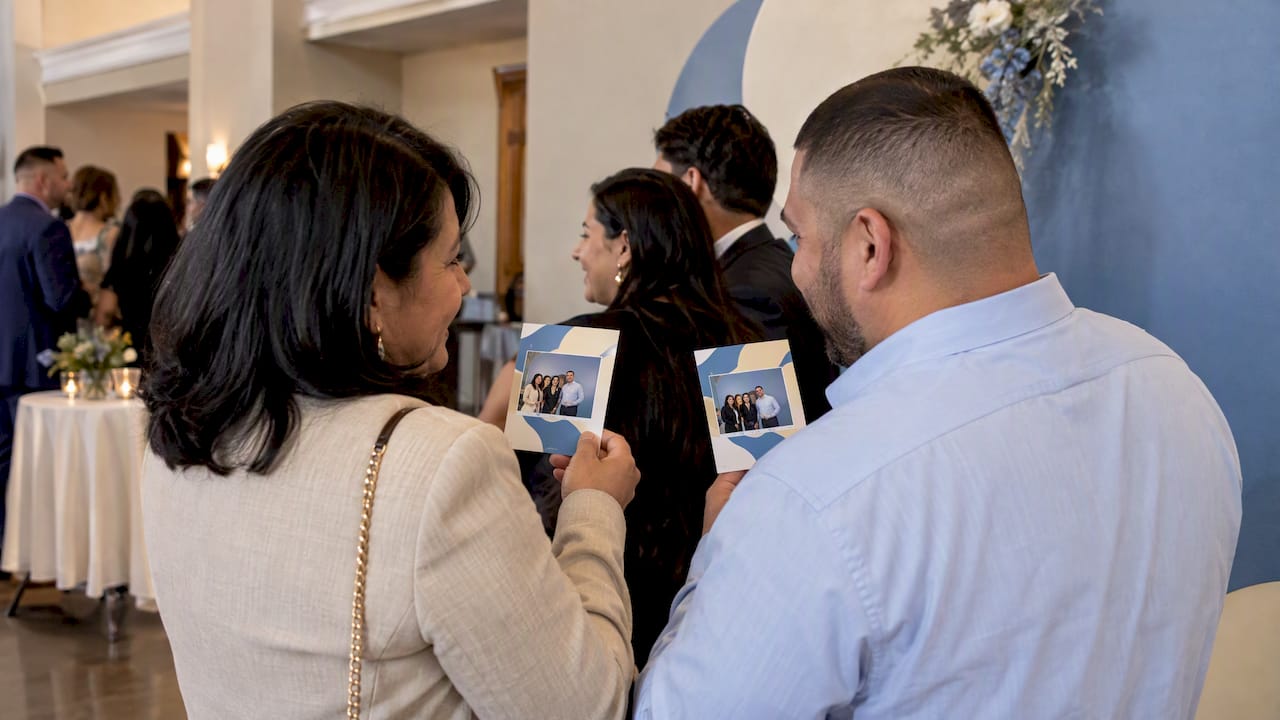
A recent experiential study of pop-up photo experiences found that custom backdrops and full-color prints were the top-ranked visual attributes for Gen Z guests, which reinforces a simple design lesson: a bold, well-printed card paired with a coordinated backdrop reads as more premium than either element on its own. Pairing your card template’s color palette with your event’s backdrop and lighting setup, rather than treating them as separate decisions, is one of the easiest ways to raise the perceived value of the whole experience.
RMD Photo Booths: what our events taught us about winning trading-card templates
Across more than 5,000 events and 1,000+ five-star reviews, we have watched certain templates consistently win over guests. MVP-style cards dominate sports nights, while elegant VIP keepsakes are the clear favorite at weddings. Our biggest operational lesson: lock the printer’s paper stock profile before the event, since last-minute guest nickname entries cause more line delays than any hardware issue we have seen.
— RMD
How we bring trading-card favors to your event
We handle trading-card favors from concept to print, pairing bold portrait templates with the stat fields and branding your event calls for. Our Trading Cards option covers full-size collectible prints, our Key Chains add-on turns the same photo into a durable daily keepsake, and our design team helps you pick a template that fits your event before the big day.
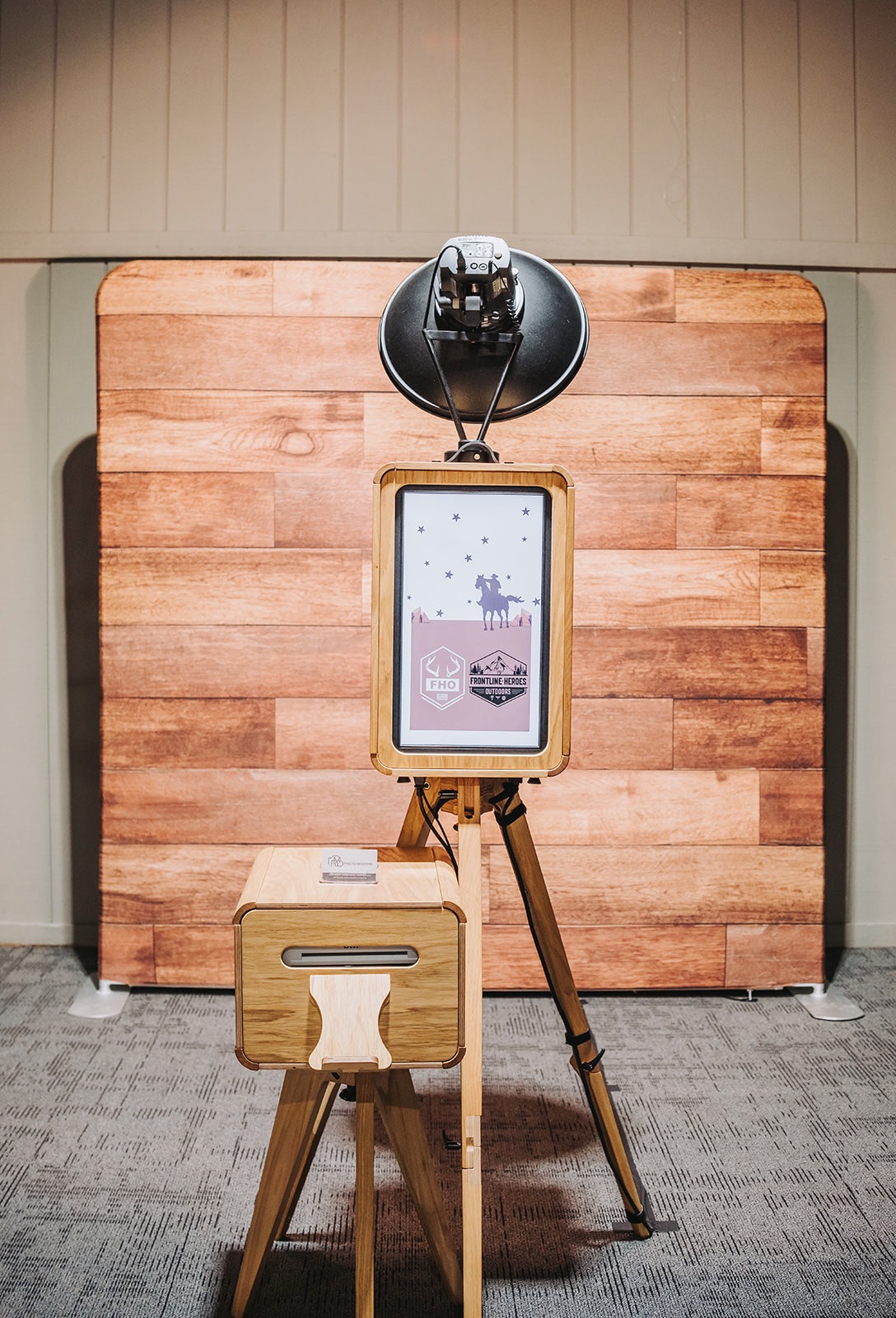
Booking starts with a quick consult where we talk through your guest count and favor goals, then you choose a template, confirm quantities, and we handle setup and printing on-site. Browse our full lineup of experiences or head straight to Book Now to lock in a date.
FAQ
What makes a trading card template feel collectible instead of disposable?
A collectible feel comes from treating the card like a mini-poster: a bold portrait, a clear headline, and two or three playful stat fields rather than a plain snapshot. A survey-to-template workflow that fills in a guest’s name, nickname, and tagline automatically adds that personal touch without slowing down the line.
How much does a trading-card photo booth cost for an event?
Our Trading Cards experience starts from $1,995, and a Key Chains add-on starts from $895. Final pricing depends on guest count, event duration, and any upsells like foil accents or double-sided printing.
Should I choose full-size cards or keychains for favors?
Full-size cards work best for sit-down events like weddings and corporate dinners where guests have time to appreciate the design, while keychains suit high-traffic events like conventions or kids’ parties where a durable, portable favor matters more. Many hosts combine both in a single package for variety.
What personalization fields should I collect from guests?
Name, nickname, and a short tagline cover most templates, with optional stat fields like a sports attribute or a fun personality trait added depending on the event theme. Collecting these through a touch-screen kiosk at the booth keeps the line moving faster than a separate paper form.
How can I keep print quality consistent throughout the event?
Run a test print on the actual paper stock before doors open, check margins and color against the approved template, and assign one team member to monitor the printer queue during busy stretches. Supply checks for paper and ink throughout the event prevent the most common mid-event slowdowns.
Sources
- Create Trading Cards Guests Want to Keep
- Creating Notable Pop-Up Photobooth Experiences: An Analysis of Gen Z’s Sensory Preferences in Davao City
For planners coordinating the full visual package, our partners at Atlanta Balloon Designer share useful thinking on why photo ops and backdrop styling matter together, and the wedding photo booth ideas roundup from Origins Ranch offers additional setup inspiration for planners building out an event-specific booth experience.
Recommended
- Examples of Personalized Booth Templates for Events
- Types of Booth Print Formats: 2026 Event Planner Guide
This article was created with the assistance of automated AI content tools using publicly available information and may contain errors, omissions, or outdated information. Content is provided for general informational purposes only and does not represent an endorsement, criticism, or official statement regarding any person, business, product, or service mentioned. Business details, pricing, services, availability, and other information may change over time. If you believe any information is inac