
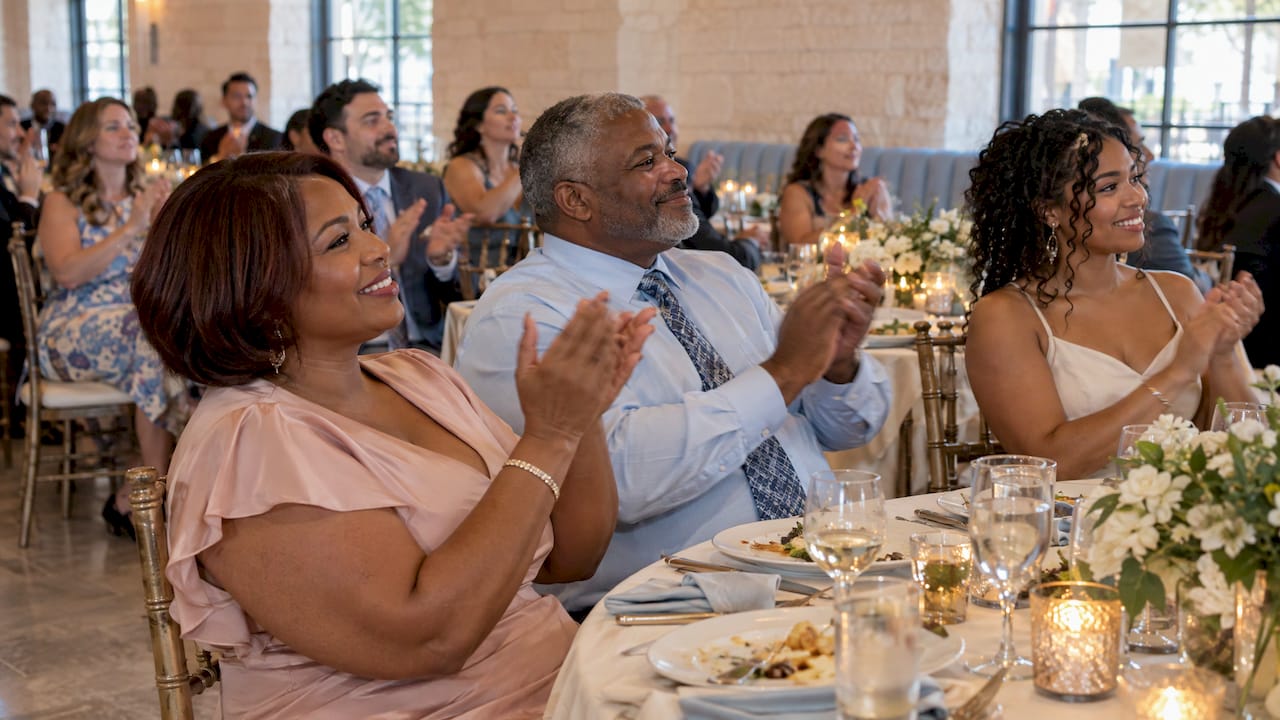
A wedding planner builds your wedding with you from the early decisions to the last dance. A wedding coordinator steps in closer to the date, usually a month or two out, to confirm what is already booked and run the day. If you want help with design, budget and vendor choices, hire a planner. If you have done the planning and want someone to hold it all together, hire a coordinator.
We work at hundreds of celebrations, so we see both roles in action every weekend. Below, we break down what each one does, when they start, what they typically cost and where the venue coordinator fits in. We also cover when to book every vendor on your list.
TL;DR
- A planner helps from the beginning: budget, venue, vendors, design and the wedding day. A coordinator joins later to confirm details and run the day.
- A venue coordinator works for the venue, not for you. They manage the space, not your outside vendors.
- Typical U.S. pricing in 2026 ranges from roughly $800 to $3,500 for day-of coordination and $3,500 to $15,000 or more for full-service planning, depending on the source.
- Book a full-service planner first, then the venue, then photo, video and entertainment.
- Check the contract for scope, extra fees and cancellation terms before you sign.
Table of Contents
- The short version: planner vs. coordinator
- What a wedding planner does
- What a wedding coordinator does
- Where the venue coordinator fits
- What each one costs in the U.S.
- How to choose: a simple decision guide
- Check the contract before you sign
- When to book each vendor
- Where the photo booth fits in your plan
- Our perspective
- Reserve the fun part
- FAQ
- Sources
The short version: planner vs. coordinator
The cleanest way to separate them is by timing and scope. The Knot’s guide says a planner plans the entire event, while a coordinator focuses on logistical planning and support for the wedding day once the couple has finished the main planning.
Here is how that looks side by side.
| Full-service planner | Partial planner | Coordinator (month-of or day-of) | Venue coordinator | |
|---|---|---|---|---|
| Who hires them | You | You | You | Comes with the venue |
| Starts | 12 to 18 months out | 3 to 6 months out | 4 to 8 weeks out | Varies by venue |
| Focus | Budget, venue, vendors, design, day-of | Finishing and refining your plan | Contracts, timeline, day-of execution | Venue space, staff, policies |
| Manages your outside vendors | Yes | Yes | Yes, on the day | Usually not |
The lead times come from Paperlust’s 2026 guide, which lists 12 to 18 months for full-service planning, three to six months for partial planning, four to eight weeks for month-of coordination and four to six weeks for day-of coordination.
What a wedding planner does
A planner is your advocate from the start. Brides lists planner duties that can include vendor referrals and contract negotiation, meetings, payment tracking, timelines, floor plans, budget management, site tours, tastings, design, transportation, and rehearsal and wedding-day management.
That is a long list, and it is the point. A planner takes decisions off your plate and brings vendor relationships you may not have. A professional wedding planning association member describes a planner’s first responsibility as being to the couple, working as their advocate from start to finish and acting on their behalf on the wedding day.
Full-service vs. partial planning
Full-service planners may work from 12 to 18 months out through the wedding day. Partial planners usually enter later. Zola says they commonly join one to three months before the wedding, sometimes as early as six months, after the major vendors and decisions are in place.
Partial planning is a good fit if you booked the venue and a few big vendors on your own, then realized the rest (timeline, design details, remaining vendors) needs a pro.
What a wedding coordinator does
Coordinators execute and stabilize your existing plan. The name can mislead, though: coordination is not limited to the wedding day itself. According to Brides, coordinators commonly meet couples four to eight weeks before the wedding, review signed contracts, confirm logistics, create timelines and floor plans, run a final walkthrough, catch overlooked details, manage the rehearsal and oversee the wedding day.
In practice, a good coordinator is the person your vendors call so that you do not have to. The DJ needs a loading door, the florist is running 15 minutes late, the photographer wants the family portraits moved up. You never hear about any of it.
Month-of vs. day-of
“Day-of” is the catchy name, but the services overlap. Investopedia notes that month-of services begin about four to six weeks out and cover vendor contact, the schedule and on-site management. If a package is truly limited to the day itself, ask exactly what the coordinator does beforehand.
Where the venue coordinator fits
This is where most couples get confused. A venue coordinator is not a cheaper planner. Here Comes The Guide explains that a venue coordinator is an employee of the venue, responsible for venue logistics: on-site staff, the event space, the main floor plan, catering and house bar service, vendor loading and unloading, guest arrival and parking, venue policies and technical operations like lighting and AV.
A planner or coordinator you hire manages your wedding experience. That includes your vision, your budget, tastings, design and the vendor team.
Things a venue coordinator generally does not cover:
- Decor. Hitch Studio notes venue coordinators do not oversee decorating, setting up centerpieces, taking down decorations, or making sure third-party vendors arrive on time.
- Anything off property. Eventistry points out that a venue coordinator is not responsible for outside vendors, your design, the guest experience, or off-site events like a rehearsal dinner, hotel shuttles or a farewell brunch.
- Full-day presence. DPNAK Events says venue coordination is often built into venue fees, and the coordinator may not be present on the wedding day. If they are, they typically arrive one to two hours before the first scheduled event and leave once dinner service is done.
So if your venue says you do not need a planner, ask who will greet your photographer, cue your entertainment, and move your timeline when the ceremony runs long. Clarity on who represents the venue and who looks after your vendors saves a lot of confusion, whether you are at a ballroom or planning outdoor seating, as this outdoor event seating workflow shows.
What each one costs in the U.S.
Prices vary by city, guest count and service level, and published averages differ from one source to the next. Here is the range across the most recent U.S. guides.
| Service | Zola | Paperlust (2026) | Joy (Aug. 2026) |
|---|---|---|---|
| Day-of coordination | $800 to $3,000 | $800 to $2,500 | $800 to $3,500 (avg. about $1,800) |
| Month-of coordination | n/a | $1,500 to $4,000 | n/a |
| Partial planning | $1,500 to $2,800 | $1,500 to $6,000 | $2,000 to $6,000 (avg. $3,200) |
| Full-service planning | Avg. $4,047 | $3,500 to $15,000 or more | $3,500 to $15,000 or more (avg. about $5,500) |
Sources: Zola, Paperlust and Joy.
How planners charge
Most planners charge a flat fee. According to Joy, some use hourly rates of $75 to $275 or a percentage of your total budget, 10% to 20%. OurVows describes common pricing as 10 to 15% of the budget for a planner, and a flat $1,200 to $3,000 for a month-of coordinator.
Costs outside the quote
The fee on the proposal is not always the final number. Joy says overlooked extras such as travel fees, overtime, rehearsal dinner coordination, extra events, assistant fees and gratuity can add $500 to $2,000 or more. Revel adds that printing and postage, decor purchases and vendor meals are commonly separate unless the package says otherwise. Ask for these in writing.
How to choose: a simple decision guide
Start with how much of the work you want to do yourself.
- You want help from the first day. You are overwhelmed by the venue search, you do not know vendors, or you are planning a large or multi-day celebration. Hire a full-service planner.
- You have booked the big pieces and need a closer. Venue, photographer and caterer are set but the design and timeline are loose. A partial planner fits.
- You have planned everything and want to enjoy the day. Hire a month-of or day-of coordinator. Pick month-of if you want someone reviewing contracts and confirming details with vendors beforehand.
- Your venue includes a coordinator. Treat that person as your venue contact, and still decide who will manage your outside vendors and the personal details.
If your budget is tight, a coordinator is usually the more affordable way to get a professional running the day. A planner pays off most when your vendor list is long and your calendar is full.
Check the contract before you sign
Both roles should come with a written agreement. The Knot’s lawyer-reviewed guide says to confirm the exact event details, defined scope of services, payment amounts and due dates, how any percentage fee is calculated, cancellation and refund notice periods, liability limits, and both parties’ signatures and dates.
The same guide stresses defining scope so you know whether things like RSVP tracking, invitation mailing or welcome-bag delivery are included or extra. Also look for the number of included hours, which vendor categories the coordinator will manage, and the rate for additional hours.
When to book each vendor
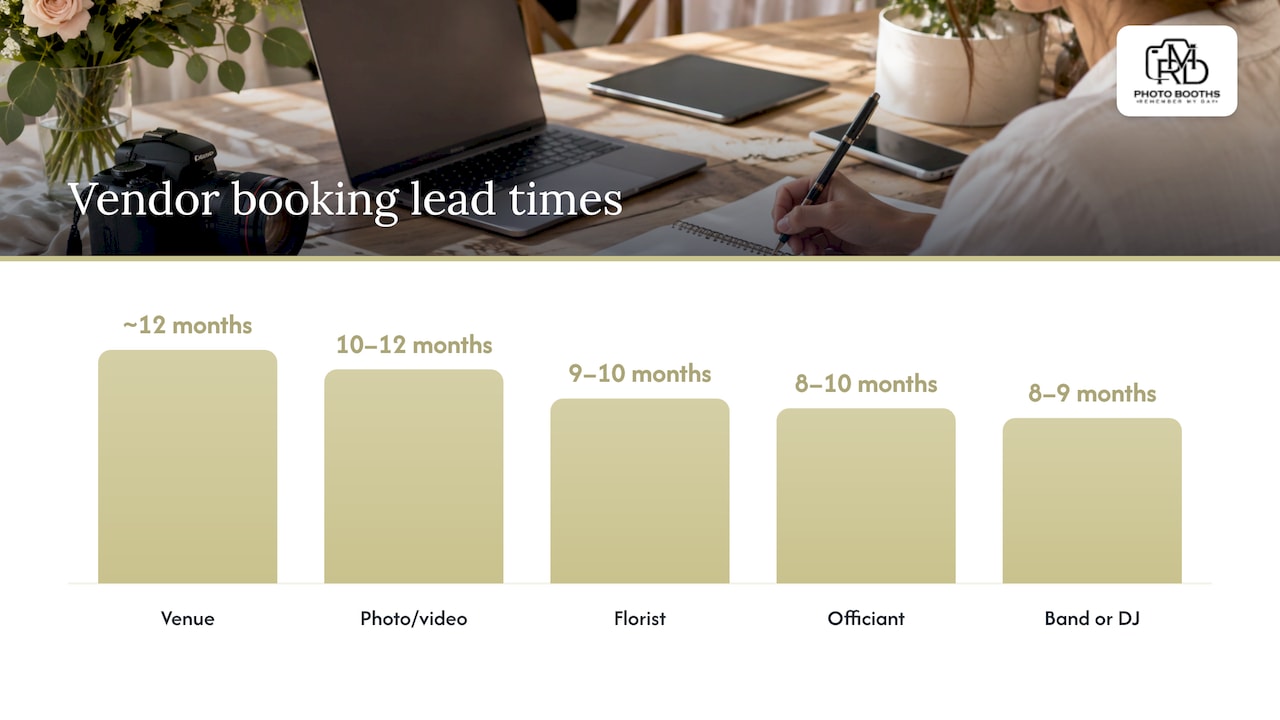
The order you book in matters almost as much as who you hire. Martha Stewart advises that a full-service planner should be the first vendor you book, with planning typically starting 12 to 18 months before the wedding, and that the venue should be secured six to 18 months ahead. Those two bookings shape every date and budget decision after them.
The Knot reports that the average couple is engaged about 15 months, which gives you room to be choosy.
Zola’s booking guide gives a handy timeline:
| Vendor | Book about this far ahead |
|---|---|
| Venue | About 12 months |
| Photographer and videographer | 10 to 12 months |
| Officiant | 8 to 10 months |
| Florist | 9 to 10 months |
| Caterer | About 8 months |
| Band or DJ | 8 to 9 months |
| Cake baker | About 7 months |
Everly’s checklist groups catering, rentals and entertainment at eight to 12 months, and hair and makeup, cake, transportation and day-of coordination at four to eight months. Entertainment extras like a photo booth fit well with that entertainment window, and popular dates in San Antonio can fill early, so reserve once your date and venue are locked.
If your first-choice vendor is taken
A flexible date helps. One booking-timeline guide, VowHarbor, says that for late bookings, moving from a Saturday to a Friday or Sunday offers much better availability, often at 20 to 30% below the Saturday rate. Your venue coordinator and your planner can also point you to trusted alternatives.
Where the photo booth fits in your plan
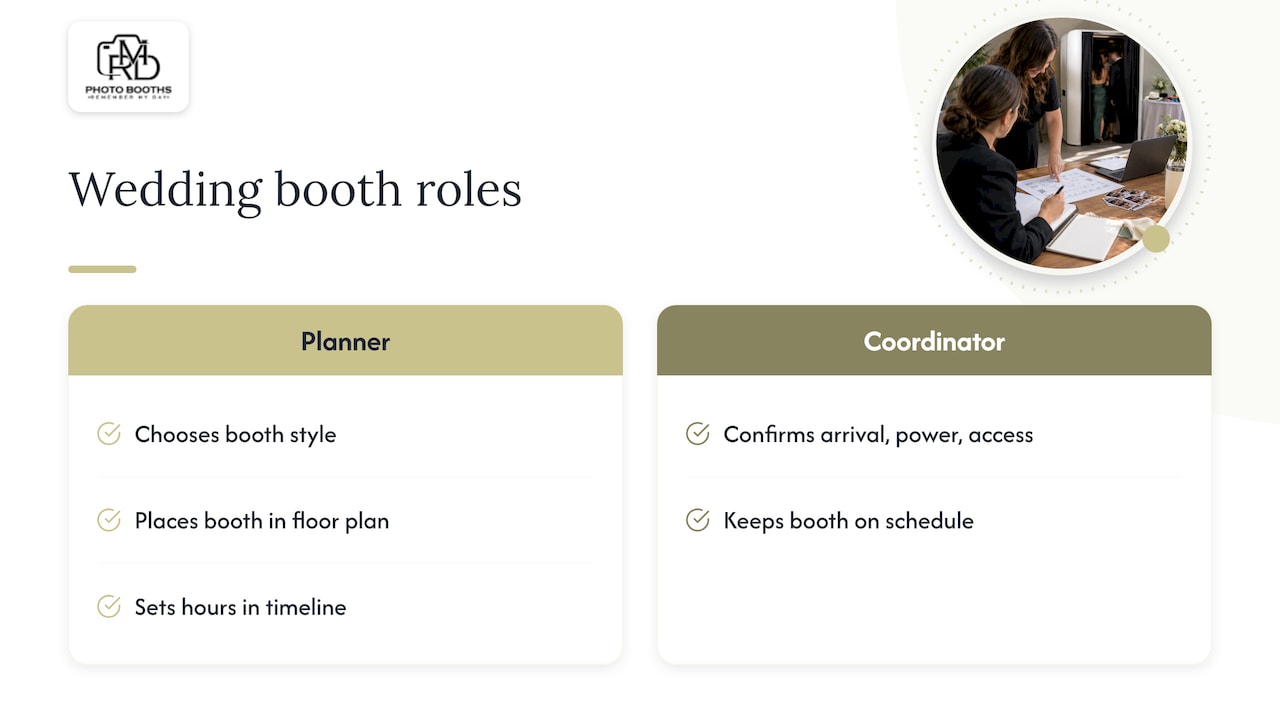
Whichever role you hire, your photo booth is one of the vendors they will schedule, and the details are easy to settle together. A planner will usually help you choose the booth style, place it in the floor plan and set its hours in the timeline. A coordinator will confirm arrival, power and setup access with us, then keep the booth running on schedule.
If you want to make their job easier, our event photo booth planning guide walks through the choices, and our booth terminology guide gives you the vocabulary. For setup specifics, our wedding photo booth setup guide covers what we need from the space. We also explain the role of booth attendants at events.
Our perspective
We have been part of more than 5,000 events, and the weddings that feel effortless almost always have one thing in common: someone owns the timeline.
That person might be a full-service planner who has been with the couple for a year, or a coordinator who stepped in six weeks out. Either way, the booth arrives, finds its spot and starts creating those “wow” moments because someone made the load-in, the power and the schedule easy.
We love working with planners and coordinators because they let us focus on what we do best: unforgettable memories for your guests. Our booths, from a traditional booth to a 360 booth, a glam booth or our roaming robot, come with online booking, customization and a team that is ready to follow your timeline.
Our advice is simple. Decide who is running your day early, then bring us into the conversation as soon as your date and venue are set.
RMD
Reserve the fun part
Once your date and venue are locked, it is time to choose the entertainment your guests will talk about. Our booths start at $625 for a Selfie Booth and $900 for a Traditional Booth, with a 360 Booth from $1,295 and a Glam Booth from $1,000. Each is a one-time fee per event, and pricing varies with booth type, event length and enhancements.

See every option on our experiences page, or go straight to booking your date. Your planner or coordinator is welcome to join the conversation.
FAQ
What is the difference between a wedding planner and a wedding coordinator?
A planner helps design and organize the wedding from the beginning, including budget, vendors and the timeline. A coordinator typically joins four to eight weeks out to confirm contracts and logistics and run the wedding day. Think of the planner as the builder and the coordinator as the person who makes sure the build opens on time.
Is a venue coordinator the same as a wedding coordinator?
No. A venue coordinator works for the venue and manages the space, staff and venue policies. A wedding coordinator works for you and manages your vendors, timeline and personal details. Many couples benefit from having both.
How much does a wedding coordinator cost?
U.S. guides in 2026 report day-of coordination from about $800 up to $2,500 to $3,500, and month-of coordination from $1,200 to $4,000, depending on the source and location. Ask what is included, since extras like overtime, travel and assistants can add to the total.
When should I hire a planner?
For full-service planning, start 12 to 18 months before the wedding, ideally before you book the venue. For a coordinator, four to eight weeks ahead is common, though good ones can book up months earlier on popular dates.
Sources
- Do You Need a Wedding Planner? (Investopedia)
- What Does a Wedding Planner Do, Exactly? (The Knot)
- Wedding Planner vs. Coordinator vs. Designer (Brides)
- The Difference Between Venue Coordinators and Wedding Planners (Here Comes The Guide)
- Planner vs. Venue Coordinator (Hitch Studio)
- Wedding Planner vs Wedding Coordinator (Eventistry)
- Venue Coordinators vs. Wedding Coordinators (DPNAK Events)
- A Professional Wedding Planners Guide (ABC Wedding Planners)
- How Much Does a Wedding Planner Cost? (Paperlust)
- Do I Need a Wedding Planner? (Zola)
- How Much Does a Wedding Planner Cost in 2026? (Joy)
- Wedding Planner vs Coordinator (OurVows)
- What Wedding Planner Charges Include (Revel)
- Wedding Planner & Coordinator Contracts: A Lawyer’s Guide (The Knot)
- When to Book Vendors for a Stress-Free Wedding (Martha Stewart)
- When to Book Wedding Vendors (The Knot)
- Exactly How Far Out to Book Each Wedding Vendor (Zola)
- Complete Wedding Vendor Checklist (Everly)
- Vendor Booking Timeline Guide (VowHarbor)
- Streamline your outdoor event seating workflow (Sitpack)
This article was created with the assistance of automated AI content tools using publicly available information and may contain errors, omissions, or outdated information. Content is provided for general informational purposes only and does not represent an endorsement, criticism, or official statement regarding any person, business, product, or service mentioned. Business details, pricing, services, availability, and other information may change over time. If you believe any information is inac