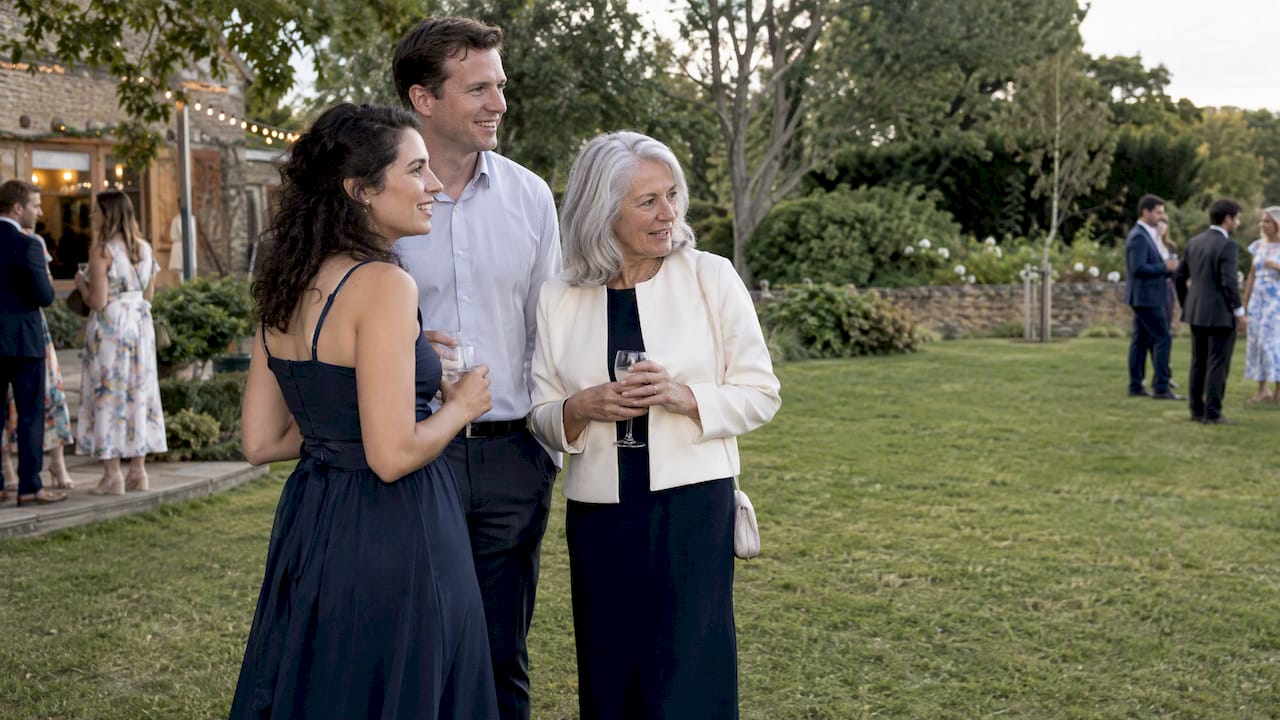
An open air booth space is the right call when you want visible, social photo moments that pull a crowd and welcome big groups. As a simple planning rule, reserve an 8-by-8-foot area for a standard setup. You’ll trade some privacy compared to an enclosed booth, and a 360 booth will ask your venue for even more room.
TL;DR:
- Reserve an 8 by 8 foot area for a standard setup and confirm 8 feet of ceiling clearance; 360 booths require more ceiling clearance.
- Adjustable LED panels or softboxes and a live preview help limit bad lighting and retakes, while print and digital delivery serve different guest preferences.
- Staffed service suits weddings and galas because attendants handle technical problems and queues; unattended setups fit smaller events where budget takes priority.
- Choose an enclosed booth when guests need privacy; 360 setups suit video spectacle but demand the most floor space and ceiling clearance.
Table of Contents
- What makes an open-air booth different from an enclosed one
- Who an open-air setup serves best
- Core features that actually matter on event night
- Space, ceiling, power, and queue flow for the booth
- What actually drives the price of an open-air rental
- Open-air versus enclosed versus 360: quick trade-offs
- How to choose: a short checklist before you book
- Our take on booth placement and staffing
- Planner quick do’s and don’ts
- How we can help with your open-air setup
- FAQ
- Sources
- Helpful resources and internal pages
What makes an open-air booth different from an enclosed one
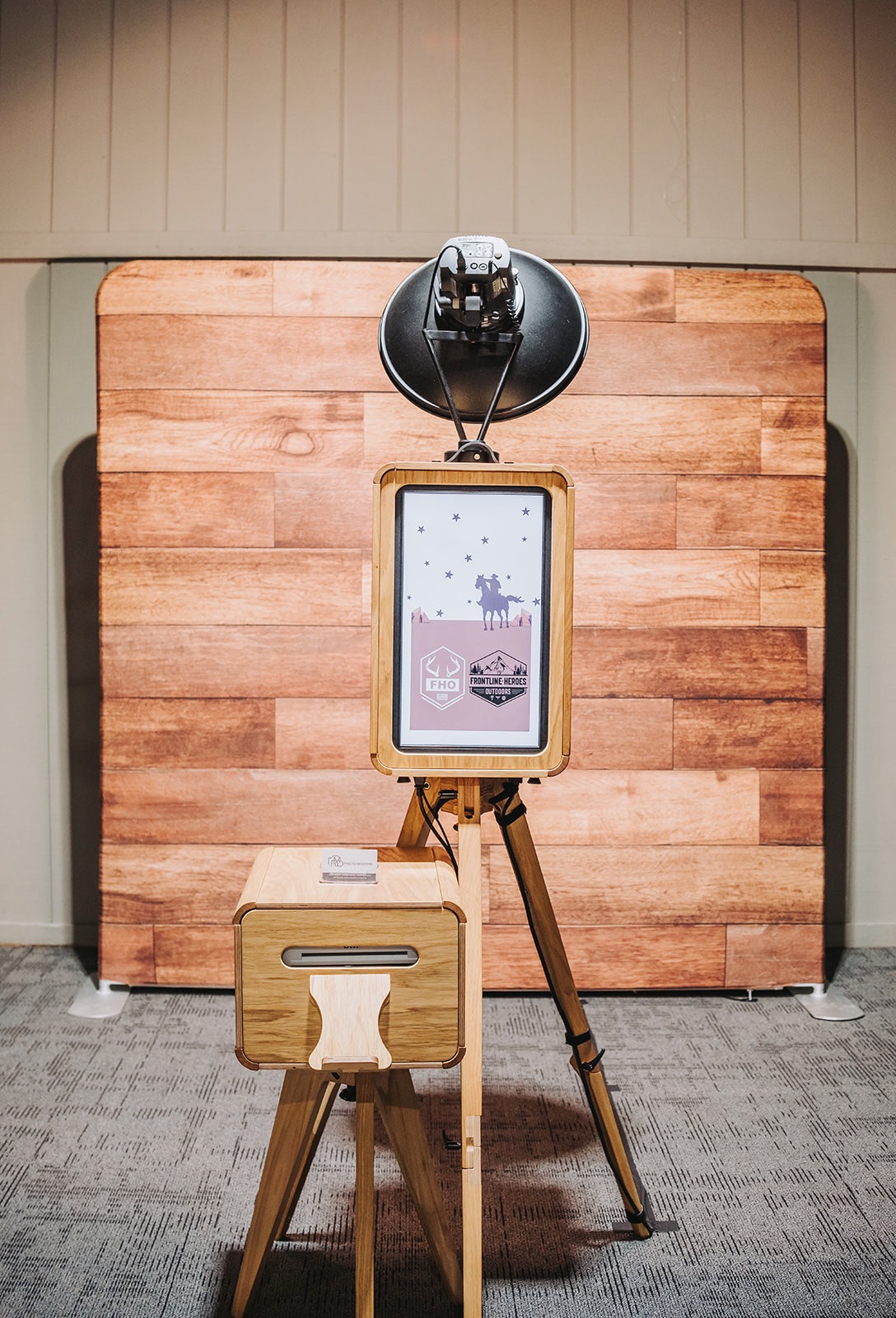
An open-air booth skips the cabin or curtain entirely. Instead, you get a camera on a stand, a backdrop behind guests, studio lighting on either side, and a prop table within arm’s reach. That open layout changes everything about how guests use it.
- Large groups can pile in together instead of squeezing through a door.
- Guests, passersby, and the whole room can watch and get pulled into the fun.
- Wheelchair users and guests with mobility needs can step right up without navigating a cabin entrance.
An enclosed booth still earns its keep when guests want privacy for a quick costume change or when a couple wants the nostalgia of a classic photo strip, which a curtain delivers.
Who an open-air setup serves best
Weddings, corporate receptions, festivals, and milestone birthday parties tend to get the most out of an open-air layout, mostly because these events thrive on group energy rather than one-on-one moments. When your guest list skews toward big friend groups or multi-generational families, an open-air setup offers more room for group photos.
- Weddings and receptions benefit from fitting entire wedding parties or tables into one shot.
- Corporate events and festivals use the visible setup as a built-in draw that pulls foot traffic.
- Large parties and milestone celebrations lean on open-air for fast, repeat group photos all night.
- Guests using wheelchairs or walkers move through an open-air setup without a step or a narrow doorway.
Guest-count guidance is simple: the bigger and more mixed your crowd, the more an open layout can outperform a cabin with limited room for group photos.
Core features that actually matter on event night
Not every spec on a vendor’s list changes your night. A few do.
Camera and sensor quality affect whether a large group shot comes out sharp or blurry, and whether a dim reception hall still produces clean, low-noise photos. Lighting matters just as much: look for LED panels or softboxes that the operator can adjust, because backlighting from a window or stage light washes faces out fast. A live preview screen lets guests see themselves before the shutter fires, which cuts down on retakes and keeps the line moving.
Prints versus digital-first is less either-or than it used to be. Offering both covers guests who want something physical to tape to a fridge and guests who just want the file on their phone before they leave. Digital sharing has become the expected default at most events, which is worth confirming with your vendor ahead of time through instant photo sharing options built for event organizers.
Backdrop depth and prop placement round out the list. A backdrop with some texture or dimension photographs better than a flat sheet, and props placed too close to the camera crowd the frame. Browsing backdrop options ahead of your event helps you picture how a design will actually read in photos.
- Camera and lighting quality drive how clean group shots and low-light shots look.
- A live preview screen speeds up the line and cuts retakes.
- Offering prints and digital covers both types of guests.
- Backdrop depth and prop placement keep photos looking intentional, not cluttered.
Pro Tip: Ask your vendor to text you a sample photo from their current lighting setup before the event, not just from their portfolio.
Space, ceiling, power, and queue flow for the booth
Nail these four details with your venue before the event and you’ll avoid almost every setup headache.
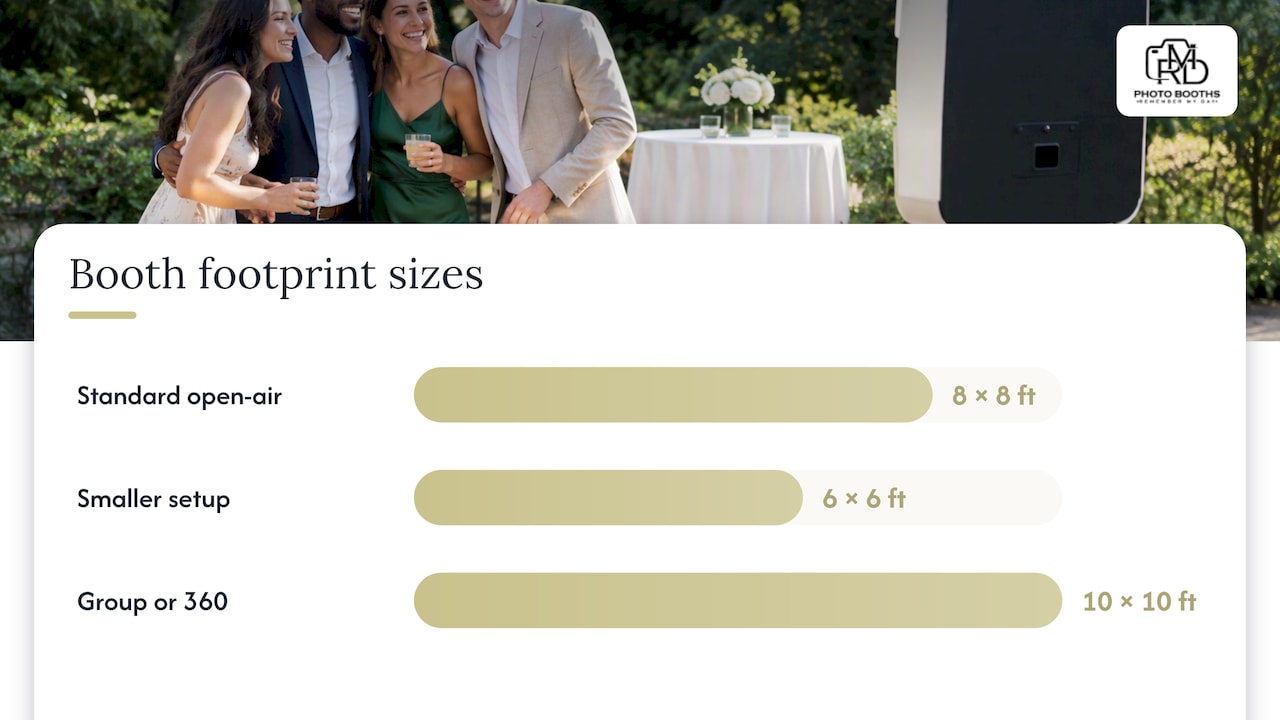
An 8-by-8-foot reservation covers the backdrop, camera stand, lighting, and prop table for a standard open-air booth, with smaller setups running closer to 6-by-6 feet and group or 360 setups needing closer to 10-by-10 feet.
- Confirm at least 8 feet of ceiling clearance, since standard backdrops and light stands run 7 to 8 feet tall; a 360 booth needs more clearance still.
- Ask the venue exactly where the nearest reachable outlet sits, and plan cord routing so it never crosses a walkway.
- Place the booth near the dance floor or bar where it stays visible, but never where it blocks a main path or a service door.
- Reserve queue space along a wall so the line never spills into foot traffic.
Getting these four right during load-in, not during the event, is what keeps a fun setup from becoming a bottleneck.
What actually drives the price of an open-air rental
Quotes vary more by service model and booth type than by anything else. A staffed booth, where an attendant manages props, troubleshoots gear, and keeps the line moving, costs more than a drop-off unit, but it’s worth the difference at a wedding or gala where a technical hiccup can’t go unfixed for an hour. Drop-off makes more sense for a smaller, lower-stakes gathering where cost matters more than backup support.
- Booth type changes the baseline: glam, 360, roaming robot, and AI-powered experiences all carry a premium over a standard open-air setup.
- Rental duration, print packages, and custom overlays or backdrops each add their own line item.
- Travel distance and setup or teardown time can show up as separate fees depending on the vendor.
Ask any vendor for an itemized quote that breaks out staffing, booth type, and add-ons separately, plus what happens if your event runs over the booked window.
Open-air versus enclosed versus 360: quick trade-offs
Each format solves a different problem, and venue constraints often make the choice for you before preference even enters the conversation.
- Open-air fits large groups, stays visible to the whole room, and welcomes guests with mobility needs, all within a moderate footprint.
- Enclosed suits guests who want privacy or a nostalgic cabin feel, though it holds far fewer people per shot.
- 360 delivers a bigger spectacle built for video and slow-motion shots, but it asks for the most floor space and the tallest ceiling clearance of the three.
A low ceiling or a tight corner at your venue will often rule out 360 before you’ve even compared prices; our 360 versus traditional booth breakdown walks through that space math in more detail.
How to choose: a short checklist before you book
Work through these in order and you’ll walk into a vendor call with everything they need to quote accurately.
- Reserve an 8-by-8-foot footprint in your floor plan and confirm ceiling height and outlet location directly with the venue.
- Ask whether a staffed attendant is included, and what their job covers if something goes wrong mid-event.
- Ask about throughput, meaning how many guests per hour the setup typically handles, plus sharing options and a backup plan if a print or connection fails.
- Confirm setup and teardown windows, along with any parking, delivery, or venue access fees that might not show up in the base quote.
Pro Tip: Send your vendor a photo of the exact spot you’re considering, taken from a few steps back, so they can flag space or lighting issues before the day of the event.
Our take on booth placement and staffing
We recommend confirming the booth footprint and outlet location with your venue before setup. In our experience, the events that run smoothest are the ones where we’ve already walked the floor plan with the planner.
One example comes up constantly during load-in: confirming outlet location and ceiling height with the venue before setup, not after, avoids same-day adjustments that eat into guest time.
Planner quick do’s and don’ts
- Do reserve extra floor space, plus a clear, unobstructed route for the queue.
- Do test lighting and sharing with a few sample shots before the first guest arrives.
- Don’t place the booth where the line will cross the dance floor or block a service path to the kitchen or bar.
— RMD
How we can help with your open-air setup
We handle setup and teardown for our open-air booths, so you’re not troubleshooting cords or lighting mid-reception. Beyond the standard open-air booth, we offer glam, 360, roaming robot, and AI-powered experiences for planners who want something a little more memorable.
Browse our full experiences lineup to see pricing and options side by side, or head straight to Book Now to check availability for your date. Send us a photo or layout of your venue and we’ll tell you exactly which booth and footprint fits your space.
FAQ
Is owning a photo booth profitable?
Profitability depends heavily on local demand, booking volume, and how much you charge per event, so there’s no single answer that holds across markets. Planners asking this question are usually better served comparing rental quotes for their specific event rather than estimating ownership costs.
What can I do instead of a photo booth at my wedding?
Couples sometimes swap a photo booth for a roaming photographer, a guest book station, or an audio guest book where guests record a quick voice message instead of a photo. Each option trades the visible, social draw of a booth for a quieter, more personal keepsake.
Where do photobooth photos get saved?
Most modern booths deliver photos two ways: a physical print on the spot and a digital copy sent by text or email, often through instant sharing tools built for events. Many vendors also host a digital gallery guests can revisit after the event ends.
How much do you pay for a photo booth?
Pricing depends on booth type, rental duration, staffing, and add-ons like custom overlays or extra prints, so quotes vary by vendor and event. Our own open-air rentals start from $625 for a Selfie Booth and scale up from there depending on the experience you choose.
Should I pick a staffed or drop-off booth?
A staffed booth makes more sense for weddings or corporate events where a technical issue needs an immediate fix and the line needs active management. Drop-off setups work fine for smaller, lower-pressure gatherings where budget matters more than hands-on support.
Helpful resources and internal pages
For backdrop styling ideas, see our fresh backdrop ideas roundup, and compare print-based keepsakes in the role of instant prints. Planners staging a larger production may also find studio and event production support useful for integrated AV needs.
Recommended
- Optimize photo booth placement for San Antonio events
- Venue Photo Booth Preparation Steps for Flawless Events
- Ultimate Event Photo Booth Setup Guide for Events
- What is an open air photo booth? Guide for San Antonio events
This article was created with the assistance of automated AI content tools using publicly available information and may contain errors, omissions, or outdated information. Content is provided for general informational purposes only and does not represent an endorsement, criticism, or official statement regarding any person, business, product, or service mentioned. Business details, pricing, services, availability, and other information may change over time. If you believe any information is inac