
Choose a roaming robot when you need a floor magnet that pulls guests in and pumps out branded, shareable content fast. Choose traditional roaming photography when you need flexible coverage and editorial-quality shots that capture the real feel of the room. The short version: robots win on buzz and speed, photographers win on nuance and range, and plenty of our favorite events book both.
TL;DR:
- Robotic booths generate instant, branded digital photos that appeal to event attendees due to their novelty and quick delivery, especially useful at high-footfall events.
- Photographers provide varied, high-quality images capturing real moments, making them the better choice for intimate events and editorial coverage where nuance matters.
- Combining both formats offers the benefit of crowd attraction from the robot and personalized storytelling from the photographer, ideal for larger or mixed-event environments.
- Prior to booking, verify venue logistics like power, connectivity, space, and accessibility, and clarify data security and ownership policies with the vendor.
Table of Contents
- What sets a robot photo booth apart from a roaming booth
- Weighing the trade-offs: engagement, content, staffing, and branding
- Matching the format to your event type
- What it costs and what drives the price up
- Getting the logistics right before the event
- RMD Photo Booths on the ground: what planners can expect
- How your guests’ photos and data stay protected
- Three questions I’d ask before booking either format
- How RMD Photo Booths can bring this to life for your event
- Selected sources for deeper reading
- FAQ
What sets a robot photo booth apart from a roaming booth
A robotic roaming photo booth is exactly what it sounds like: a mobile, LED-lit unit that glides through your event with an onboard camera, a live touchscreen, and an automated flow that captures a photo and sends it to a guest’s phone in moments. No one is holding a camera. The robot moves along a set path or is guided by a staff member, and it pulls double duty as both camera and conversation starter, since most guests have never seen anything like it.
A roaming booth, by contrast, usually means a human photographer carrying a portable kit or a compact kiosk through the crowd, snapping candid shots and directing posed ones on the fly. It is a people-first format: the quality of the final gallery depends on the photographer’s eye, not an algorithm.
When you are comparing the two for a booking, line them up across the same categories:
- Capture method: automated onboard camera versus a photographer’s handheld equipment.
- Interaction model: guests approach and trigger the robot themselves versus a photographer initiating the shot.
- Outputs: instant digital shares from the robot versus a mix of candid and directed shots from a human eye.
- Branding: on-screen overlays and templates on the robot versus post-production branding added by the photography team.
Plenty of planners skip the either-or question entirely. A hybrid setup, robot plus a staffed booth or wandering photographer, gives you the crowd-pulling novelty and the deeper, more personal coverage in the same event.
Weighing the trade-offs: engagement, content, staffing, and branding
Here is where the decision actually gets made, feature by feature:
- Engagement: the robot’s lights, screen, and sheer novelty act like a magnet, drawing guests over simply because nobody has seen one before.
- Content quality: a photographer’s lens and framing judgment still edge out a fixed onboard camera when the goal is varied, high-fidelity imagery.
- Staffing: robots typically need a nearby attendant for troubleshooting and crowd flow, while roaming photographers are fully self-sufficient.
- Branding and sponsor visibility: robots display overlays and watermarks live on-screen, which sponsors love for instant visibility, while photographers apply branding afterward during editing.
- Reliability: a stalled robot is a visible problem on a crowded floor, so a contingency plan matters more here than it does with a photographer who can simply adapt and keep shooting.
Pro Tip: Always confirm what happens if the robot needs a reset mid-event, who handles it, and how fast.
Matching the format to your event type
Trade shows, product launches, and brand activations are where a roaming robot earns its keep. The novelty draws foot traffic to your booth, and the instant, branded shares extend your reach onto attendees’ own social feeds.

Weddings, intimate receptions, and anything with an editorial brief lean the other way. A roaming photographer reads the room, catches the unscripted moments, like a grandmother’s laugh or a first look, that a fixed camera angle would miss entirely.
Festivals and other high-footfall events often call for both:
- A robot stationed near a high-traffic zone to catch volume and generate shareable content.
- A roaming photographer covering stages, VIP areas, or quieter corners for richer storytelling.
- A charging and reset station kept close to the robot’s route for fast recovery.
- A clear handoff plan so staff know which format covers which zone.
What it costs and what drives the price up
Robot rentals are typically quoted as flat event packages, with the price shaped by rental length, travel distance, and how much custom branding you want on the screen. Staffed roaming photography follows a similar shape: a base package plus add-ons for extra hours, a dedicated attendant, or rush editing.
The line items that tend to move the number most are travel distance, the level of overlay or sponsor branding, whether a dedicated attendant is included, and any connectivity add-ons needed for instant sharing. When you compare vendor quotes side by side, check for:
- What deliverables are included (digital gallery, prints, video clips, GIFs).
- How fast guests actually receive their photos during the event.
- Who owns the image files afterward and for how long.
Getting the logistics right before the event
A robot or a photographer both need the venue to cooperate, and that means confirming a few things well before load-in.
- Footprint and circulation: map out a path that avoids chokepoints, stairs, and tight doorways so the robot can move freely and safely, considering studio and event rental in Providence, RI for logistical planning.
- Power and connectivity: venue Wi-Fi is rarely strong enough on its own, so plan for a cellular backup, since upload latency is what makes or breaks instant photo sharing.
- Staffing and maintenance: know who handles battery swaps, software hiccups, and guest questions in real time.
- Accessibility and venue rules: confirm ADA clearance, insurance requirements, and any house rules the venue enforces for moving equipment.
Pro Tip: Ask your venue contact for a floor plan in advance and walk the robot’s route yourself before guests arrive.
RMD Photo Booths on the ground: what planners can expect
We have run both robot and roaming setups across thousands of events, and the pattern holds: the format matters less than the execution behind it. RMD Photo Booths has earned over 1,000 five-star reviews across a wide mix of weddings, galas, and corporate activations, and we treat the robot experience as one tool in a bigger toolkit rather than a gimmick.
What that looks like in practice:
- Easy online booking so you can lock in a format without back-and-forth calls.
- Custom overlays and branding built into the robot’s live screen for sponsor visibility.
- On-site staffing included, so there is always someone managing the robot’s route and troubleshooting on the spot.
- A full lineup of experiences to pair with the robot when your event calls for layered coverage.
How your guests’ photos and data stay protected
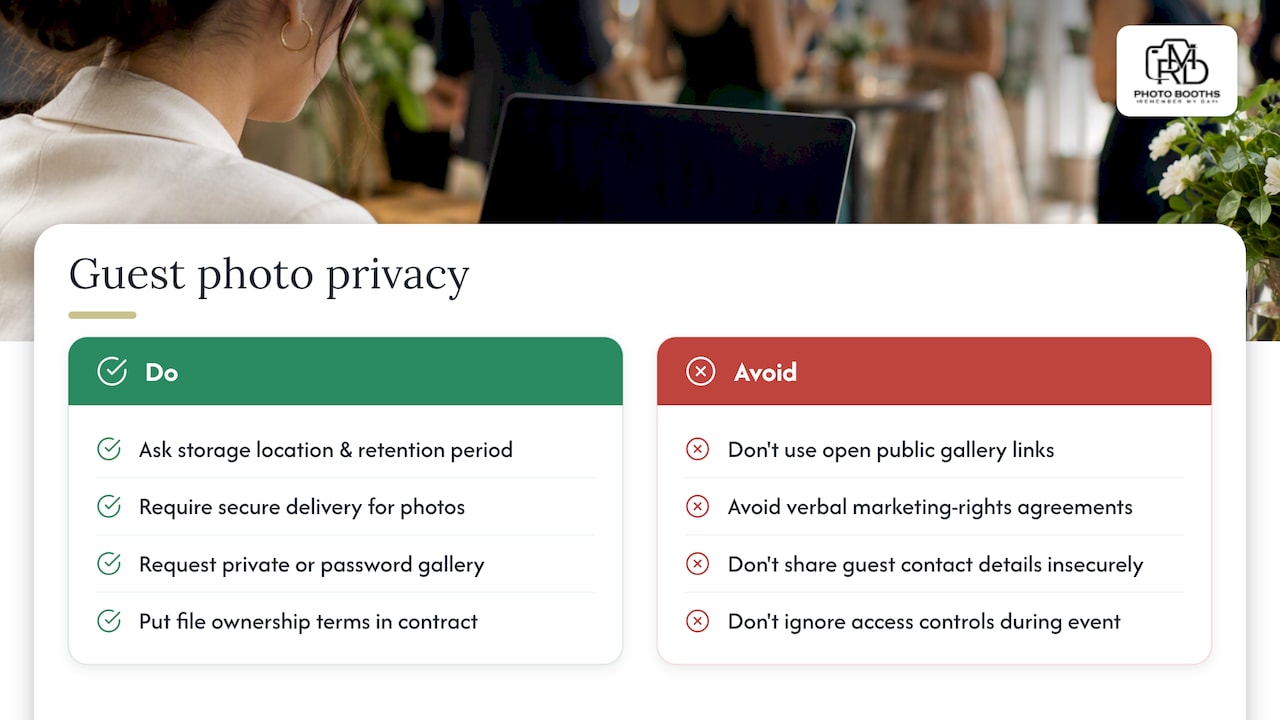
Robotic photo booths capture a lot in a short window, faces, phone numbers for delivery, and sometimes email addresses for follow-up galleries. That makes a few questions worth asking before you sign a contract.
Find out where captured images are stored and for how long, and whether the vendor deletes guest data after the event or retains it for marketing. Ask whether delivery happens over a secure connection, since sending photos via SMS or email means personal contact details are moving through the vendor’s system, not just your event’s.
Confirm who can access the live gallery during the event: an open link is convenient for social sharing, but it also means anyone with the URL can view guest photos. If your event includes minors, VIPs, or confidential brand previews, ask for a private or password-protected gallery option instead of a fully public one.
Finally, get clarity on file ownership. Some vendors retain rights to use event photos in their own marketing unless you opt out in writing, so that detail belongs in the contract, not a verbal assurance.
Three questions I’d ask before booking either format
Ask every vendor the same three things: what’s the power and connectivity backup plan, how fast will guests actually receive their photos, and what exactly does the attendant handle versus what falls on your team. The answers tell you more than any brochure will.
— RMD
How RMD Photo Booths can bring this to life for your event
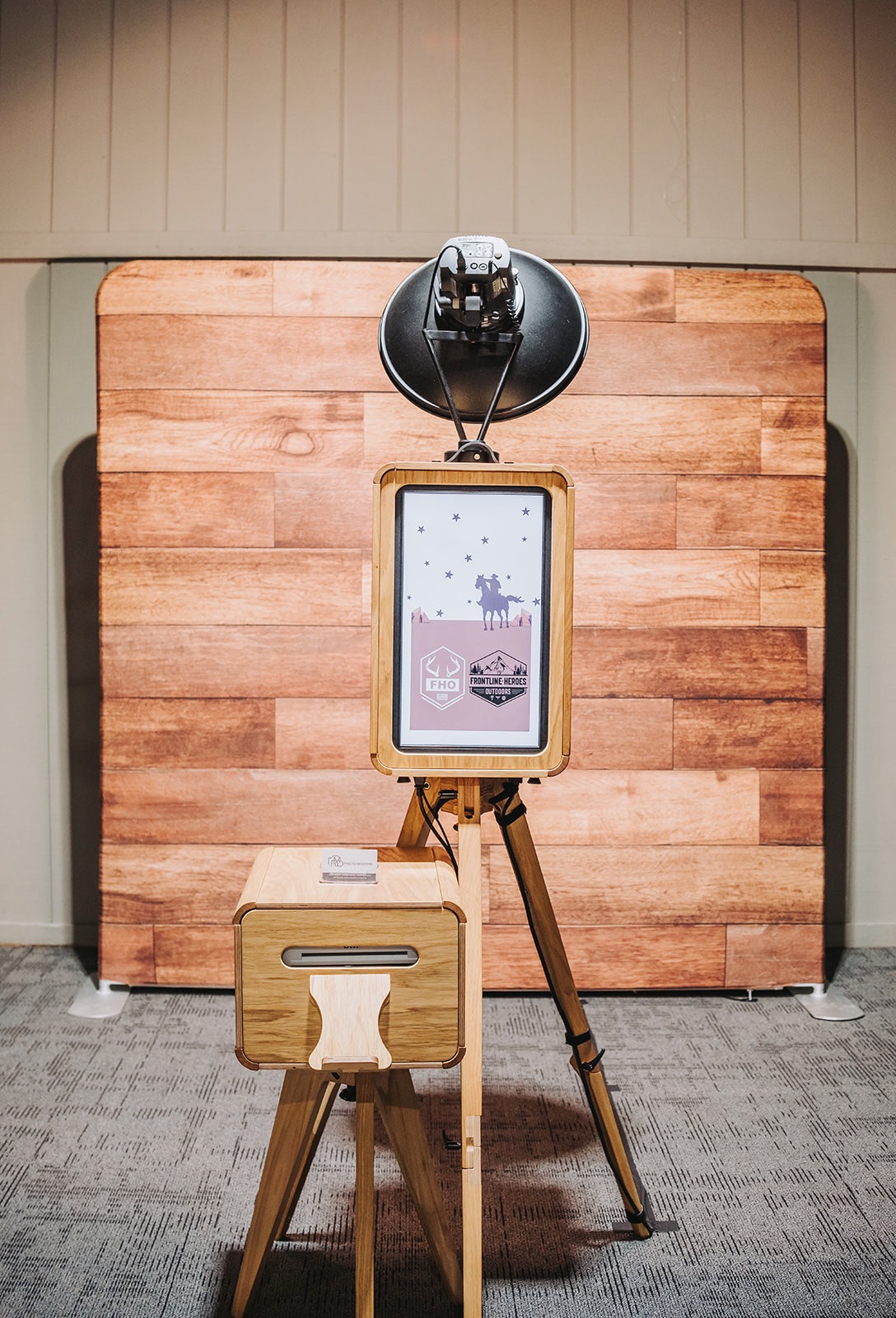
Whichever direction fits your event, we can set it up without the back-and-forth. Our Robot Booth is the only roaming robot photo booth option of its kind in South Texas, and our Roaming Booth pairs a photographer with a portable kit for events that need flexible, candid coverage.
A few ways we make this easy:
- Robot Booth packages include on-screen branding and a dedicated attendant. Current pricing details are available on the pricing page.
- Roaming Booth packages are offered for events that want a photographer moving through the crowd. Current pricing details are available on the pricing page.
- Hybrid bookings pair both formats so you get crowd-pulling novelty and personal, candid shots in one event.
Ready to compare options for your date? Book now and we’ll walk you through what fits your venue and guest count best.
Selected sources for deeper reading
- FilterPixel Live: why real-time delivery drives social engagement.
- Premagic: campaign data on live photo distribution.
- Honcho: workflow tips for instant sharing.
FAQ
What photo booth do the Kardashians use?
Celebrity events often feature custom, high-end booth setups, but no single booth brand is publicly confirmed as their standard choice. For most planners, the better question is which format, robot, roaming, or traditional, fits your own guest experience goals.
Do photo booths make a lot of money?
Photo booth businesses can be profitable since pricing is typically a flat one-time fee per event rather than an hourly wage, but earnings depend heavily on booking volume, equipment costs, and market demand. For event hosts, the more relevant cost question is what a rental runs, which varies by booth type and package.
How much does a robot photo booth cost?
Robot photo booth rentals are typically quoted as event packages rather than hourly rates, with the price shaped by rental length, travel, and branding add-ons. As one example, RMD’s Robot Booth starts from 1395 USD one-off.
What is a roaming photo booth?
A roaming photo booth is a portable setup, either a human photographer with a mobile kit or a compact kiosk, that moves through an event capturing guests where they are instead of waiting for them to visit a fixed station. It is built for candid, flexible coverage across a crowd rather than a single posed backdrop.
Recommended
- Rent a Robot Photo Booth: 40% More Guest Participation
- What Is a Robot Photo Booth? Event Impact Explained
- Interactive Event Solutions Explained for Planners
This article was created with the assistance of automated AI content tools using publicly available information and may contain errors, omissions, or outdated information. Content is provided for general informational purposes only and does not represent an endorsement, criticism, or official statement regarding any person, business, product, or service mentioned. Business details, pricing, services, availability, and other information may change over time. If you believe any information is inac