TL;DR:
- Creative booth design, or experiential exhibit design, combines storytelling, spatial planning, lighting, and interactivity to engage visitors actively. It emphasizes participation over aesthetics, guiding visitors through phases from curiosity to qualification, ultimately generating meaningful leads and lasting impressions. Effective designs align with event goals, utilize technology, and prioritize visitor experience to boost ROI and brand recall.
What is creative booth design, really? Most people assume it means a good-looking display with bright colors and a bold logo. That’s a starting point, not a strategy. True creative booth design, known in the industry as experiential exhibit design, is a deliberate system combining storytelling, spatial planning, lighting, interactivity, and brand identity to pull visitors in and give them something worth remembering. If you plan events or design spaces for a living, understanding this distinction changes everything about how you approach a booth from the ground up.
Table of Contents
- Key takeaways
- What creative booth design actually means
- Designing purposeful visitor journeys
- Inspiring approaches in creative exhibit design
- Budgeting and practical tips for your booth
- Connecting booth design to event success
- My honest take on where booth design is heading
- Bring your vision to life with Rmdphotobooths
- FAQ
Key takeaways
| Point | Details |
|---|---|
| More than aesthetics | Creative booth design is a participatory system, not just a visual display. |
| Visitor journey matters | Designing engagement phases guides visitors from curiosity to qualified commitment. |
| Tech drives participation | AR, VR, touchscreens, and AI integrations make booths memorable and measurable. |
| Modularity saves money | Reusable and scalable components let you stay creative without blowing the budget. |
| Alignment amplifies results | Booth design must connect to overall event goals to generate real leads and lasting impact. |
What creative booth design actually means
At its core, creative booth design combines five foundational elements: storytelling, spatial planning, graphics and branding, lighting, and interactivity. Each one plays a specific role. Storytelling gives the booth a reason to exist beyond selling something. Spatial planning controls how visitors physically move and what they notice first. Graphics and branding create immediate recognition. Lighting directs attention and shapes mood. Interactivity turns observers into participants.
The difference between a traditional booth and an experiential one comes down to passivity versus participation. Traditional static displays put products on a table, hand out brochures, and hope people stop. Experiential booths invite exploration. They create an environment visitors want to enter, spend time inside, and talk about afterward.
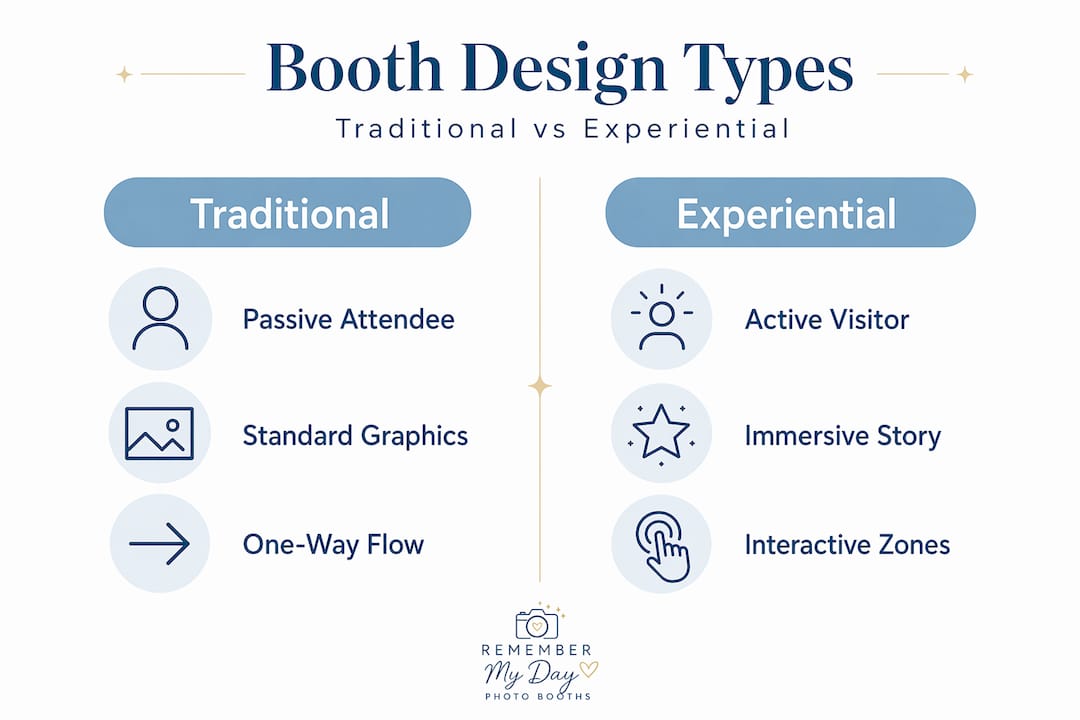
Here is a direct comparison to make this concrete:
| Feature | Traditional booth | Experiential booth |
|---|---|---|
| Visitor role | Passive observer | Active participant |
| Primary tool | Printed materials | Interactive technology |
| Engagement duration | Under 30 seconds | 2 to 10 minutes |
| Brand communication | Logo and tagline | Story, sensation, and memory |
| Measurement | Foot traffic count | Qualified leads and dwell time |
The table above shows why event planners are shifting their budgets. A visitor who spends 8 minutes inside a booth leaves with a fundamentally different relationship to the brand than one who glanced at a banner.
Pro Tip: Effective visitor communication requires coordinated storytelling, spatial design, lighting, and interactivity working together. Branded graphics alone, no matter how polished, cannot carry the full weight of a memorable experience.
Designing purposeful visitor journeys
How you design a booth should follow how human attention actually works. Research from immersive booth planning breaks visitor engagement into four sequential phases, each requiring different design tools.
-
Curiosity (0 to 5 seconds). This is the stop trigger. Your booth needs at least one powerful sensory cue visible from 20 feet away. Motion, unexpected scale, unusual lighting, or a sound element all work. If nothing catches the eye in this window, the visitor walks past.
-
Exploration (5 to 90 seconds). The visitor has paused. Now the layout must reward self-directed movement. Open entryways, tiered product displays, and clearly defined zones invite people to wander inward rather than hover at the edge.
-
Deep dive (2 to 10 minutes). This is the qualification phase. Touchscreens, product demonstrations, AR or VR experiences, and one-on-one conversations happen here. Interactive technology including AR, VR, and motion sensors makes this phase genuinely memorable and keeps dwell time high.
-
Post-booth commitment. Digital takeaways, QR-linked follow-up content, and memorable keepsakes extend the relationship after the visitor walks away. This is where the booth keeps working for you.
This behavior funnel is not theoretical. Booths that engineer each phase intentionally generate more qualified leads than those designed around appearance alone. Spatial storytelling guides the emotional arc. A well-placed scent, a floor graphic that tells you where to stand, or a ceiling installation that makes you look up all serve specific roles in this progression.
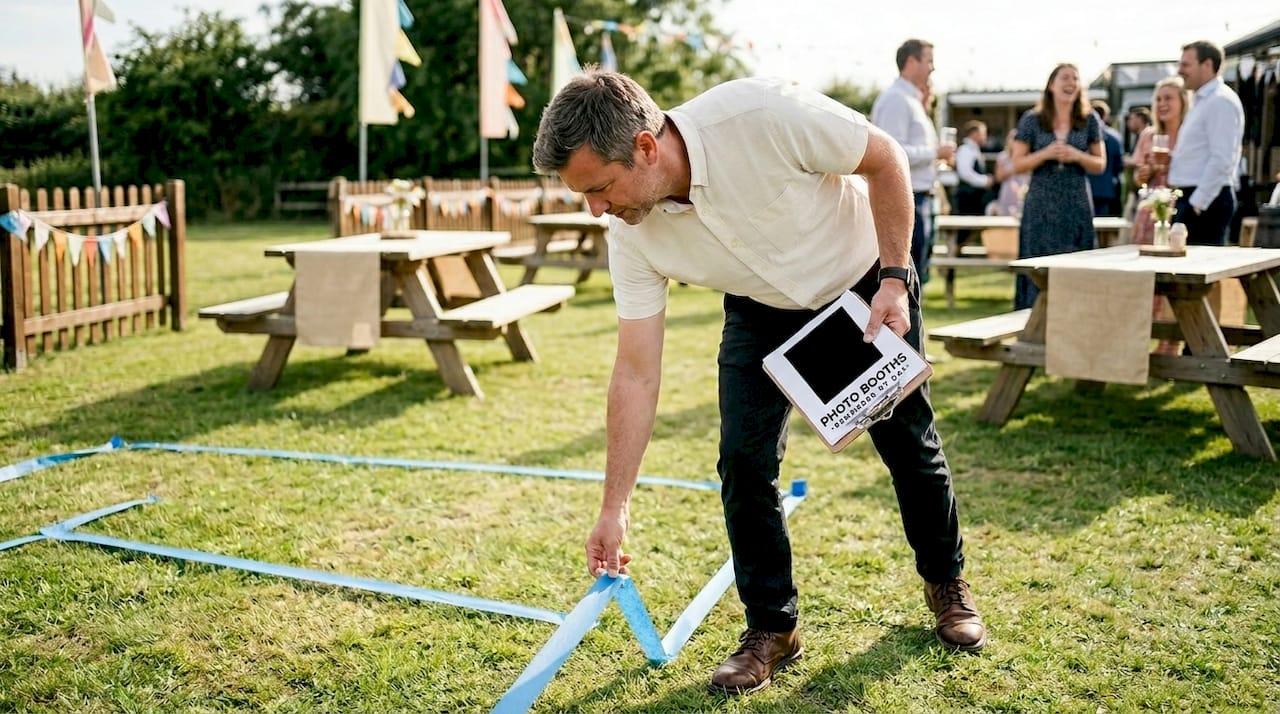
Pro Tip: When mapping your booth layout, tape out the full footprint on a warehouse floor before finalizing the design. A tangible floor layout gives you and your client a real sense of flow, entry points, and dead zones that no rendering can fully reveal.
Inspiring approaches in creative exhibit design
Real-world examples show what these principles look like when executed well. Here are some of the most instructive approaches shaping modern creative exhibit design today.
A minimalist spatial storytelling concept at the World of Coffee trade show used a 400-square-foot floor decal as the primary design element. No towering walls, no cluttered shelving. The floor itself became the story, functioning as a blueprint come to life. The result was a booth people stopped to photograph and discuss long after the event ended.
On the technology side, the ASUS/ROG presence at Computex 2026 featured multiple interactive zones including AI-driven product experiences and gamified participation areas. Visitors were not just looking at hardware. They were competing, creating, and sharing. That level of brand immersion is extraordinarily difficult to replicate through any other marketing format.
Sustainability is also shaping booth design ideas in ways that are both creative and cost-smart. The Somfy stand at YED 2026 earned recognition for modular reusability through tool-free assembly and lightweight LED integration. The stand could be reconfigured for different event footprints without rebuilding from scratch, cutting both waste and cost.
Key innovative design tactics worth adding to your toolkit:
- Asymmetrical layouts that break expected grid patterns and create visual tension drawing visitors forward
- Multisensory layers like custom scents, curated audio, and textured surfaces that trigger emotional memory
- Living or natural elements including plants, water features, or organic materials that add warmth and contrast against tech-heavy environments
- Participatory photo moments designed specifically for social sharing, turning visitors into brand ambassadors before they leave the floor
- Narrative arcs told across distinct zones so the full story only reveals itself as visitors move deeper into the space
Budgeting and practical tips for your booth
Creative booth design does not require unlimited money. It requires smart prioritization. Budget-focused strategies focus on identifying the two or three highest-impact elements aligned with your specific marketing goals, then investing there rather than spreading a modest budget thin across every possible feature.
Modularity is one of the most underused tools in creative exhibit design. A modular system lets you reconfigure the same components for a 10×10 space at a local event and a 20×30 footprint at a national conference. You buy once and adapt repeatedly. That is a meaningful shift in long-term cost structure.
Rentals offer another practical path. Renting unique trade show booths or specific tech elements rather than purchasing them outright lets you access higher-quality experiences at a fraction of the capital cost. This works especially well for technology-heavy features like 360-degree capture stations or AI-powered activations.
Additional practical considerations:
- Identify your primary conversion goal before finalizing any design element. If lead capture is the objective, every design decision should feed that funnel.
- DIY graphic elements are feasible for large-format prints but rarely worth the risk for structural or tech components where professional execution matters.
- Build in buffer time and budget for on-site adjustments. Booth assembly rarely goes exactly as planned, and rigid budgets with no contingency create stressful workarounds.
- Prioritize portability. Lightweight components reduce shipping costs significantly over the lifetime of a reusable system.
Pro Tip: Think of your booth as a product launch, not a décor project. Every element should serve a measurable function. If you cannot articulate why a design choice is there, it is probably taking up space that a conversion-driving element could use instead.
Connecting booth design to event success
A genuinely creative booth does not operate in isolation. The most impactful designs are those aligned with the broader event strategy from the start. That means knowing your event objectives before a single design decision is made.
Start by defining success in concrete terms. Are you measuring badge scans, demo completions, social mentions, or post-event consultation requests? Those goals shape everything from layout to the technology you deploy inside the space. A booth designed to generate social sharing looks very different from one optimized for qualified sales conversations.
Ways to extend booth impact beyond the event itself:
- Offer digital takeaways such as personalized recap videos, branded photos, or downloadable resources tied to the booth experience
- Use post-event follow-up sequences referencing specific interactions visitors had inside the booth to make outreach feel personal rather than generic
- Capture email data at interactive stations and integrate it directly with your CRM for immediate follow-up
- Brief booth staff thoroughly on the visitor journey phases so they know when to engage and when to let visitors explore independently
Coordination between your design team and event staff is where many booths fall short. Beautiful design and undertrained staff produce inconsistent results. The physical environment and the human experience inside it must tell the same story.
My honest take on where booth design is heading
I’ve watched the industry shift dramatically over the past several years, and the clearest lesson I’ve learned is this: participation beats decoration every single time. I’ve seen booths with extraordinary production value that visitors walked past in seconds because there was nothing to do inside them. I’ve also seen modest setups with a single compelling interactive element generate lines.
The pitfall I encounter most often is overloaded spaces. Planners add elements because they can, not because each one serves the visitor journey. The result is sensory noise that confuses rather than engages. Strategic restraint, choosing three exceptional elements over ten average ones, consistently outperforms the maximalist approach.
What actually boosts ROI is planning the booth like a personalized experience designed specifically for your audience rather than a general display. Visitor flow, timing, and post-event follow-through matter as much as the physical design itself. My advice: spend as much time planning the human experience inside the booth as you do designing the structure around it.
— RMD
Bring your vision to life with Rmdphotobooths

At Rmdphotobooths, we know that the best events are built on experiences people treasure forever. Our range of photo booth options, from classic setups to 360-degree capture stations and AI-powered portrait experiences, brings the kind of creativity and interactivity that modern booth design demands. We have earned over 1,000 five-star reviews because we genuinely care about making every event spark joy. Whether you are planning a corporate activation, a wedding, or a large celebration in San Antonio, our team is ready to help you create those “wow” moments your guests will talk about long after the night ends. Explore our full range of creative booth experiences or book your booth today and let us bring your vision to life.
FAQ
What is creative booth design in simple terms?
Creative booth design, formally known as experiential exhibit design, is a system combining storytelling, spatial planning, lighting, branding, and interactivity to create immersive environments that engage visitors beyond passive viewing. It prioritizes participation over decoration.
How do you design a booth that actually attracts visitors?
Start with a strong stop trigger visible from at least 20 feet away, then design distinct zones that reward deeper exploration. Engagement phases guide visitors from curiosity through to a qualified conversation or conversion action.
What are the key benefits of creative booth design?
The benefits of creative booth design include longer dwell times, higher-quality leads, stronger brand recall, and more social sharing. Experiential booths can keep visitors engaged for 2 to 10 minutes compared to under 30 seconds for traditional static displays.
Can creative booth design work on a limited budget?
Yes. Budget-focused approaches prioritize two or three high-impact elements aligned with your marketing goals, and lean on modular systems and rentals to access premium experiences without the full capital cost of custom builds.
What role does technology play in unique trade show booths?
Technology including AR, VR, AI integrations, and touchscreens is what separates truly unique trade show booths from standard displays. When aligned with engagement goals, immersive tech increases participation, extends dwell time, and generates measurable lead data.