TL;DR:
- Hybrid event photography captures both in-person and virtual participation at the same time, creating a unified visual record. It requires specialized skills, equipment, and planning to document live speakers, audience reactions, and broadcast technology simultaneously. Proper execution enhances long-term marketing value, audience engagement, and event credibility.
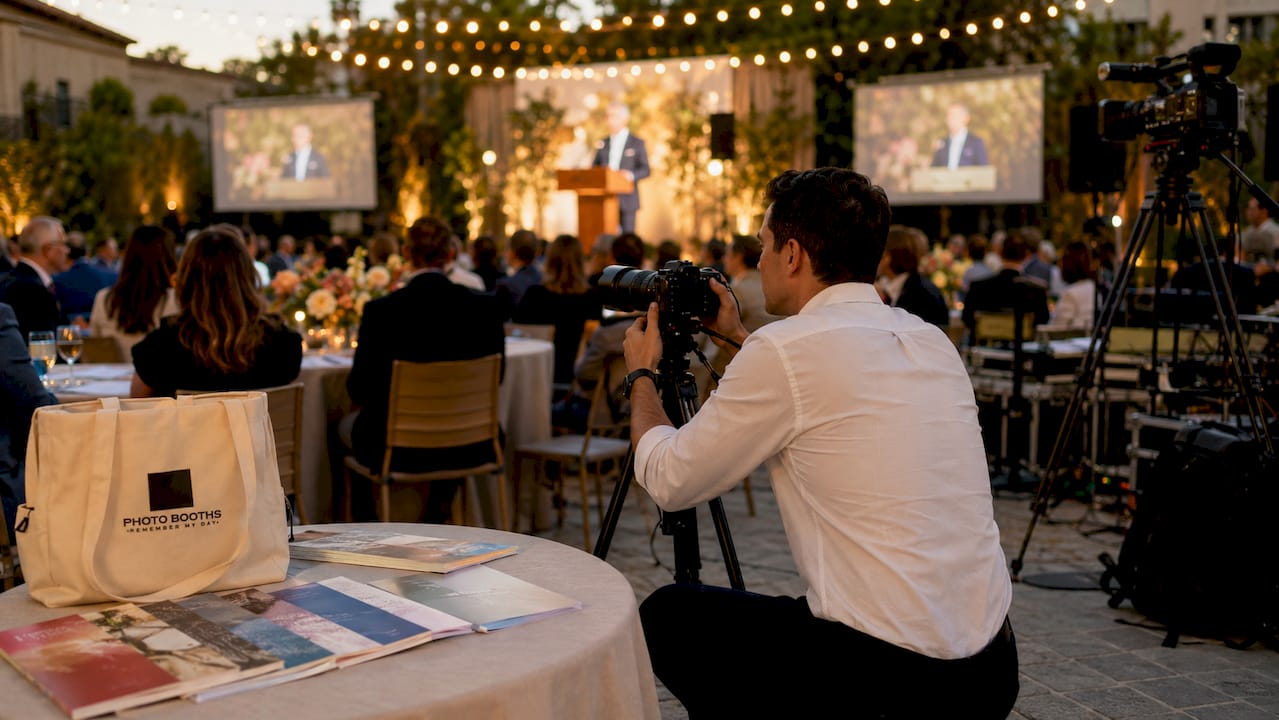
Hybrid event photography is defined as the simultaneous documentation of both in-person and virtual participation at a single event, producing a unified visual record for all audiences. The industry now recognizes this as the standard for corporate conferences, product launches, and large-scale celebrations where physical and digital audiences attend in parallel. Unlike traditional event photography, this practice requires capturing live speakers, attendee interactions, and the broadcast technology that connects remote participants. Platforms like Zoom, Microsoft Teams, and dedicated event streaming services have made virtual attendance a genuine, active experience rather than a passive one. Photographers who master this dual focus deliver content that serves both the live room and the online audience equally well.
What is hybrid event photography and how does it differ from traditional coverage?
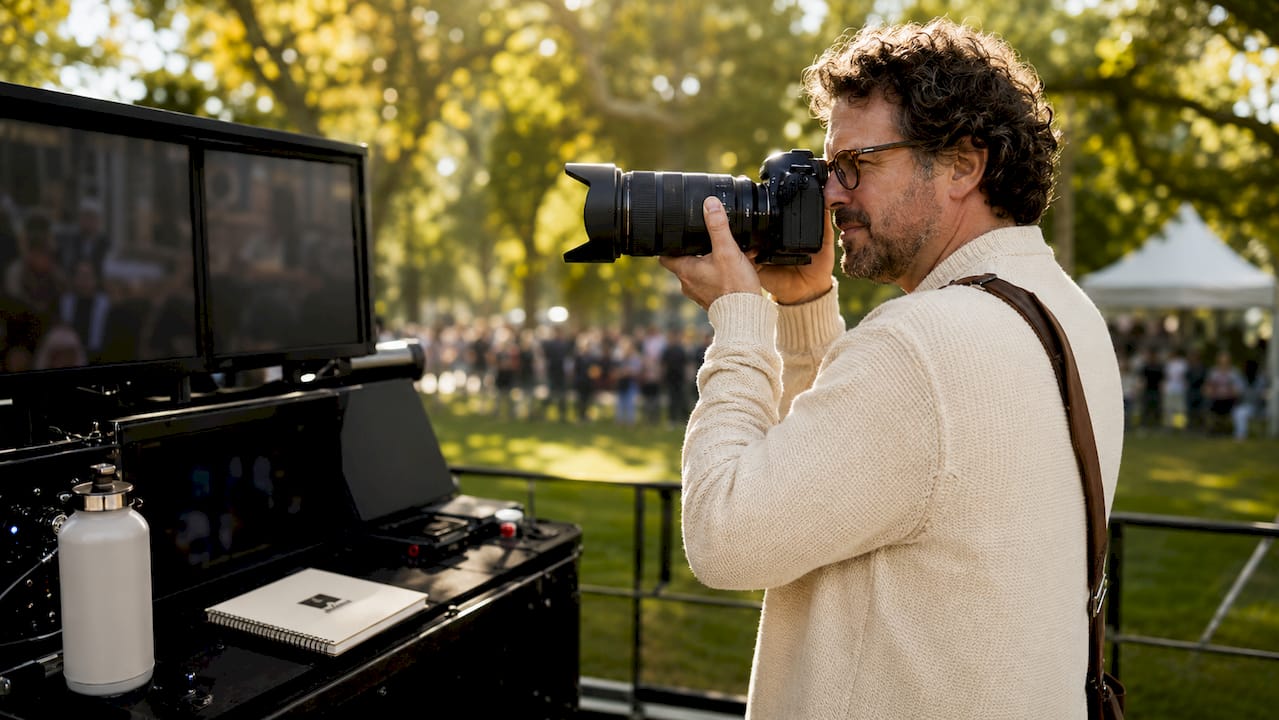
Hybrid event photography captures two parallel experiences at once: the physical atmosphere in the room and the live broadcast infrastructure connecting virtual attendees. Virtual attendance is active participation with networking and interaction options, not passive video watching. That distinction matters for photographers because it means remote participants deserve the same visual storytelling as the people in the room.
Traditional event photography focuses on one environment with consistent lighting and a single audience. Hybrid photography requires the photographer to document speakers on stage, audience reactions, large display screens, broadcast camera rigs, and the production crew managing the virtual stream. All of this happens simultaneously, often in the same challenging room. The result is a far more complex assignment that demands both technical skill and editorial judgment about what to shoot and when.
The industry term most professionals use is “hybrid event photography,” though some production teams call it “dual-audience documentation” or “integrated event coverage.” Both phrases describe the same core practice. Understanding this distinction helps event organizers brief photographers accurately and set realistic expectations for deliverables.
What are the main types of hybrid events and how do they shape photography?
Hybrid events follow three structural models: simultaneous, sequential, and hub-and-spoke. Each model creates a different photography workflow and requires different equipment priorities.
| Event type | Structure | Photography implication |
|---|---|---|
| Simultaneous | In-person and virtual audiences attend at the same time | Photographer must cover both the room and the broadcast setup concurrently |
| Sequential | In-person event is recorded and released to virtual attendees afterward | Photographer focuses on live coverage first, then curates content for digital release |
| Hub-and-spoke | A central venue connects multiple satellite locations | Multiple photographers or remote coordination needed across locations |
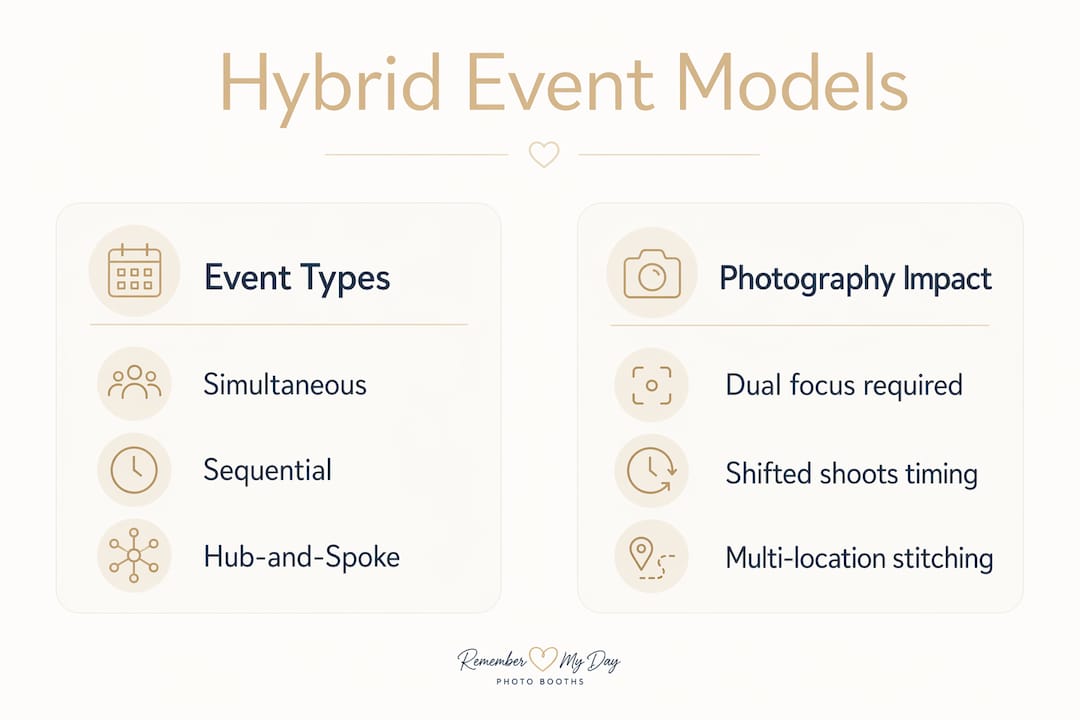
The simultaneous model is the most demanding. The photographer must move between the stage, the audience, and the production desk without missing key moments in any of those areas. The sequential model offers more breathing room but still requires the photographer to think about how images will read on a screen rather than in a printed program. The hub-and-spoke model, which connects satellite venues to a central location, often requires coordinated teams rather than a single photographer working alone.
Knowing the event structure before the shoot day is not optional. It determines how many cameras you need, whether you require a second shooter, and how you will organize your editing workflow after the event.
What specialized techniques and equipment are essential for hybrid event photography?
Lighting is the biggest technical challenge in hybrid event spaces. Rooms are often darkened for screen projection, creating extreme contrast between the bright stage and the dark audience area. A photographer using standard event settings will either blow out the screen content or lose the audience entirely in shadow.
The practical solution requires three things working together:
- High-sensitivity camera bodies with strong ISO performance (full-frame sensors from Canon, Nikon, or Sony handle this well)
- Fast prime lenses in the f/1.4 to f/2.8 range to gather maximum light without raising ISO to unusable levels
- Dynamic exposure adjustments shot by shot, moving between the bright stage and the darker room as the program shifts
Shooting stills and video simultaneously enriches storytelling and provides versatile content for post-event marketing. Switching between photo and video during an event reduces missed moments and increases the total content value delivered to the client. However, trying to shoot stills and video without adapting settings is a common mistake. Photographers need scene-specific presets loaded before the event starts, not improvised on the fly.
Unified color grading in post-production strengthens the narrative cohesion of hybrid photographic materials. When stills and video clips share the same color profile, the final content package feels intentional rather than assembled from mismatched sources.
Pro Tip: Set up two or three camera presets before the event: one for the bright stage, one for the dark audience area, and one for the production desk with its mix of screen glow and ambient light. Switching presets takes two seconds. Fixing a bad exposure in post takes twenty minutes.
Real-time image selection and delivery during events helps communication teams engage virtual audiences immediately via social media. Instant content delivery multiplies media impact and expands engagement well beyond the physical venue walls.
Why is hybrid event photography valuable for event success and marketing?
Photographs from hybrid events deliver lasting marketing value, with content reused in blogs, social media, and press for months after the event ends. That extended content lifespan increases event ROI in a way that a single-day live experience cannot match on its own.
The marketing benefits of professional hybrid event photography include:
- Extended content lifespan. A well-photographed hybrid event produces assets that fuel social media, email newsletters, and press releases for months.
- Dual audience engagement. Images that show both the live room and the virtual experience validate the investment of every attendee, regardless of how they joined.
- Brand positioning. Photos of polished production setups, engaged audiences, and professional speakers communicate organizational credibility to future sponsors and partners.
- Post-event communications. Recap articles, highlight reels, and speaker profiles all depend on strong photography to perform well in organic search and social sharing.
Documenting the event’s technical infrastructure is equally important. Screens, broadcast cameras, and streaming platforms represent the foundation of virtual audience engagement. Photos of that infrastructure tell the full story of how the event worked, which matters for future marketing and for sponsors who want proof of production quality.
The role of technology in event photography has grown significantly as hybrid formats have become standard. Organizers who invest in professional hybrid coverage consistently report stronger post-event engagement than those who rely on in-house snapshots.
How to plan and execute hybrid event photography for optimal coverage
A strong hybrid photography plan starts weeks before the event, not on the morning of the shoot. Here is a practical sequence that works for most hybrid event formats:
- Meet with the production and tech team. Learn the streaming platform, the screen layout, the camera positions for the broadcast, and the lighting plan. This briefing prevents surprises on shoot day.
- Map the shooting zones. Identify the stage area, the audience seating, the production desk, and any satellite locations. Assign priority levels to each zone based on the program schedule.
- Confirm internet connectivity. Real-time content delivery requires a reliable upload connection. Confirm the venue’s bandwidth before the event, and have a mobile hotspot as a backup.
- Pre-load camera presets. Set exposure, white balance, and ISO presets for each shooting zone. Label them clearly so you can switch without looking at the menu.
- Coordinate with the social media team. Agree on a delivery format and timeline for real-time images. A shared folder in Google Drive or Dropbox works well for fast handoffs during the event.
- Plan your storytelling arc. Decide which moments define the event narrative: the opening keynote, the audience reaction to a major announcement, the virtual Q&A on screen. Prioritize those moments in your shot list.
Photographers must capture two parallel experiences: the event atmosphere and the live broadcast technology. Both are part of the story. Skipping the technology documentation leaves a gap in the visual record that no amount of great speaker portraits can fill.
Pro Tip: Arrive at least 90 minutes before the event starts. Use that time to walk every shooting zone, test your presets under the actual lighting conditions, and introduce yourself to the production team. The relationships you build in that window will get you access to positions that a late-arriving photographer will never see.
Creative event photography that balances technical precision with genuine storytelling is what separates forgettable coverage from images that clients use for years. The technical side gets you in the door. The storytelling side gets you rehired.
Key takeaways
Hybrid event photography succeeds when photographers document both the live room experience and the broadcast technology simultaneously, using high-sensitivity equipment, scene-specific presets, and real-time delivery workflows.
| Point | Details |
|---|---|
| Dual documentation is required | Capture both the physical audience and the virtual broadcast infrastructure to tell the full event story. |
| Event structure shapes the workflow | Simultaneous, sequential, and hub-and-spoke formats each demand different equipment and staffing decisions. |
| Lighting management is the core technical challenge | Use fast lenses, high-ISO sensors, and pre-set exposure profiles to handle extreme contrast in darkened event spaces. |
| Real-time delivery multiplies marketing value | Sending edited images to the social media team during the event extends reach beyond the physical venue immediately. |
| Content lifespan justifies the investment | Hybrid event photos fuel blogs, press, and social media for months, increasing overall event ROI. |
Why hybrid photography is the skill set every event organizer should prioritize
We have seen firsthand how the gap between good intentions and great execution shows up in hybrid event photography. Organizers often book a talented photographer who has never worked a hybrid format and then wonder why the images feel incomplete. The virtual side of the event goes undocumented. The production desk never gets photographed. The screens showing remote attendees appear in zero final images. That is not a photography failure. It is a planning failure.
The photographers who thrive in hybrid environments are the ones who treat the technology as a subject, not an obstacle. They walk the room before the event starts and ask the production team which moments will matter most to the virtual audience. They think about the person watching from a laptop in another city and ask what image would make that person feel present in the room.
The common pitfall is treating hybrid photography as traditional event photography with a few extra shots of a screen. It is a fundamentally different discipline. The shot list is longer, the lighting is harder, and the storytelling obligation is doubled. Organizers who understand that going in will brief their photographers better, allocate more time for setup, and end up with content that actually serves both audiences. That is the outcome worth planning for.
— RMD
How Rmdphotobooths can add a creative spark to your hybrid event

At Rmdphotobooths, we know that great hybrid events need more than a camera pointed at the stage. They need moments that make every guest, whether in the room or online, feel genuinely part of the celebration. Our photo booth experiences are designed to create exactly those moments. From our 360° booth experiences that produce shareable video content in seconds to our AI-powered portrait booths that guests treasure long after the event ends, we bring the kind of energy that makes hybrid events memorable for everyone. We also offer personalized photo booth experiences tailored to your event’s brand and audience. Ready to make your next hybrid event truly shine? Book your experience with Rmdphotobooths today.
FAQ
What is hybrid event photography in simple terms?
Hybrid event photography is the practice of documenting both the in-person and virtual components of an event simultaneously. The goal is a complete visual record that represents every attendee, regardless of how they participated.
What equipment do photographers need for hybrid events?
Photographers need full-frame camera bodies with strong high-ISO performance, fast lenses in the f/1.4 to f/2.8 range, and pre-loaded exposure presets for different lighting zones. A reliable internet connection is also required for real-time image delivery.
How does hybrid photography differ from traditional event photography?
Traditional event photography covers one physical environment and one audience. Hybrid photography requires simultaneous coverage of the live room, the virtual broadcast setup, and the technology infrastructure connecting remote participants.
What are the three types of hybrid events?
The three main types are simultaneous, sequential, and hub-and-spoke. Each format requires a different photography workflow, staffing level, and equipment plan to achieve full coverage.
Why should event organizers invest in professional hybrid event photography?
Professional hybrid photography produces content with a lifespan measured in months, fueling social media, press, and marketing long after the event ends. It also validates the experience of virtual attendees, which strengthens engagement and brand credibility.