TL;DR:
- Open concept booths are event spaces without physical barriers, encouraging spontaneous guest interaction. They increase dwell time and brand recall by removing psychological barriers and welcoming larger groups. This design trend enhances guest satisfaction and event ROI across weddings and corporate events.
Open concept booths are event spaces designed without physical barriers or counters, allowing guests to walk in freely and interact without hesitation. Event hosts choose open concept booths because they remove the psychological friction that closed setups create, turning a passive display into a genuine experience. The open booth layout benefits are measurable: barrier-free designs increase dwell time by 30–50% compared to traditional closed-counter setups. That single shift in layout changes how guests feel, how long they stay, and how much they remember. Whether you are planning a wedding in San Antonio or organizing a corporate event, understanding the open concept booth advantages is the clearest path to a booth guests actually want to visit.
Why event hosts choose open concept booths for better engagement
Open layouts work because they eliminate what event designers call the “sales trap” feeling. When guests see a counter or a closed enclosure, their instinct is to avoid it. Removing physical barriers replaces that avoidance with curiosity, making attendees feel they are entering a welcoming space rather than a sales pitch environment. That shift in perception is the foundation of every open concept booth advantage.
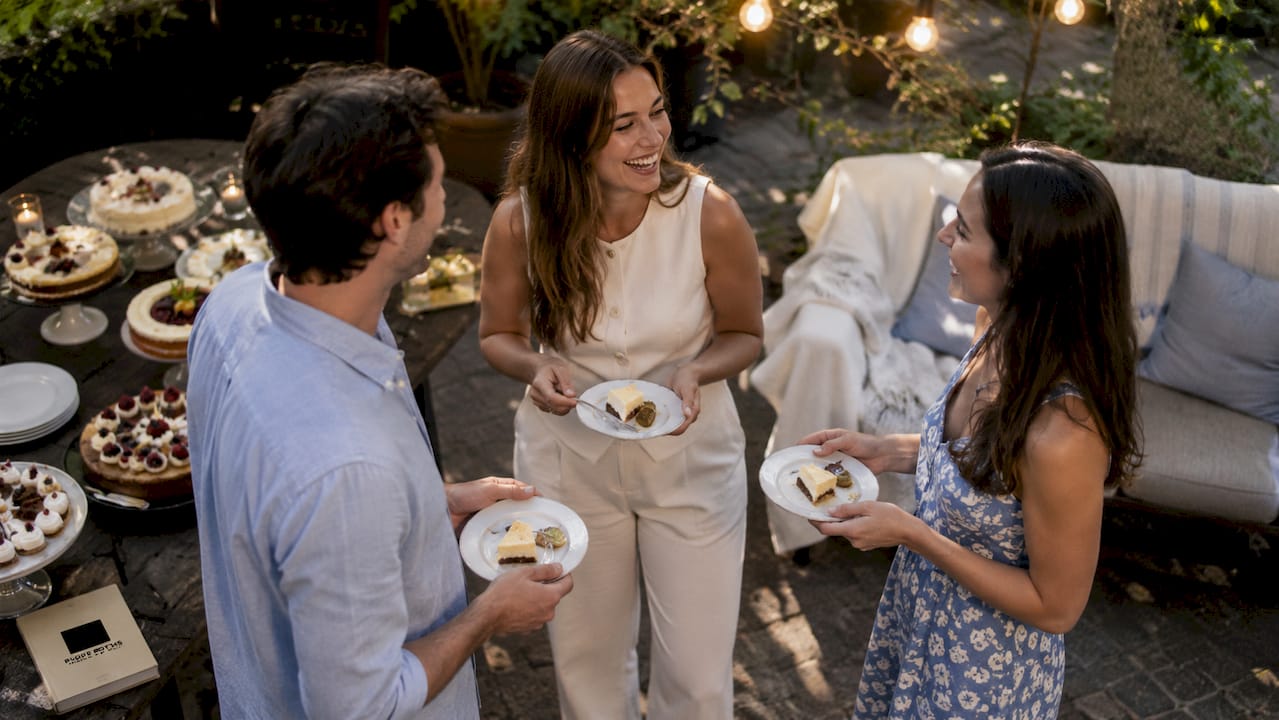
The numbers reinforce this. Over 80% of attendees decide which booths to visit within the first few minutes of arriving at an event. That means your booth has seconds to signal “come in.” An open layout does that instantly because guests can see everything from across the room.
Here is what specifically drives higher engagement in open booth designs:
- Visibility from a distance. No walls means guests see the activity happening inside, which pulls them in naturally.
- Group participation. Open layouts accommodate groups of two, four, or more without anyone feeling squeezed or excluded.
- Spontaneous interaction. Guests who were not planning to stop often do, simply because there is no barrier to cross.
- Multi-sensory engagement. Designing for sight, touch, and sound in open spaces significantly boosts brand memory over visual-only displays.
Pro Tip: Place one eye-catching interactive element at the front edge of your open booth. Guests who can touch or try something before fully committing are far more likely to stay.
The hands-on nature of open concept spaces is what separates them from traditional setups. Guests are not observers. They are participants. That distinction matters enormously for how they remember the experience afterward.
How do open concept booths improve brand recall and event ROI?
Hands-on interactions in open-concept spaces boost brand recall by up to 70% compared to passive observation. That is not a marginal improvement. It means guests who engage with an open booth are dramatically more likely to remember the brand, the host, and the experience when they leave.
“Open booths shift from being sales traps to relationship-building environments by replacing counters with hospitality zones.” This is the defining insight of 2026 event design, and it explains why open booth layouts are now the preferred choice for corporate planners and wedding hosts alike.
The ROI case goes beyond recall. Open layouts create space for longer, higher-quality conversations because guests feel comfortable lingering. Comfortable seating, open sightlines, and no physical counter between host and guest all contribute to conversations that feel natural rather than transactional. For corporate events, that translates directly into better lead qualification. For weddings, it means guests connect more deeply with the experience you have created for them.
The experiential marketing trend driving 2026 event planning is sometimes called the “un-booth” approach. The idea is simple: design for experience and environment rather than traditional branding clutter. Open concept photo booths fit this model perfectly. They are interactive, social, and memorable without requiring a single sales pitch.
What design principles should event hosts follow for open booths?
Getting the layout right is where open concept booth advantages either shine or fall apart. The most common mistake is trying to do too much in one space. A 10×10 open booth should focus on one objective to avoid overcrowding and visitor confusion. Trying to run a product demo, a lounge area, and a photo station in the same small footprint creates visual chaos that drives guests away.
Follow these five design principles to get the most from your open booth layout:
- Define one primary purpose. Choose between a demo zone, a photo experience, or a lounge. Mixing all three in a small space loses guests fast.
- Position staff outside the booth threshold. Staff standing outside the entry and initiating genuine conversations convert far more visitors than staff waiting inside.
- Use lighting to create a focal point. Bright, directed lighting draws the eye and signals where guests should go first.
- Keep signage large and simple. One clear back wall graphic communicates your message from across the room without cluttering the space.
- Add at least one tactile element. Something guests can touch, hold, or interact with physically anchors their attention and extends dwell time.
Pro Tip: For photo booth setup, mark a subtle floor boundary with a rug or lighting change. It defines the space without creating a psychological barrier.
The table below summarizes the core design decisions for open concept booths across different event types.
| Design element | Wedding events | Corporate events |
|---|---|---|
| Primary focal point | Floral backdrop or glam setup | Branded back wall graphic |
| Staff role | Friendly guide for group photos | Proactive conversation starter |
| Tactile element | Props and custom print keepsakes | Product demo or branded giveaway |
| Lighting style | Warm, soft, romantic tones | Bright, clean, brand-aligned colors |
| Space objective | Guest experience and memory-making | Lead engagement and brand recall |
Effective lighting, large simple back wall graphics, and clear entry points are the three non-negotiable elements for any open booth that needs to attract and organize guests from a distance. Get these right and the rest of the design falls into place.
How do open concept booths compare to closed booths?
The differences between open and closed booth designs go beyond aesthetics. They affect who participates, how long they stay, and what the experience costs you.
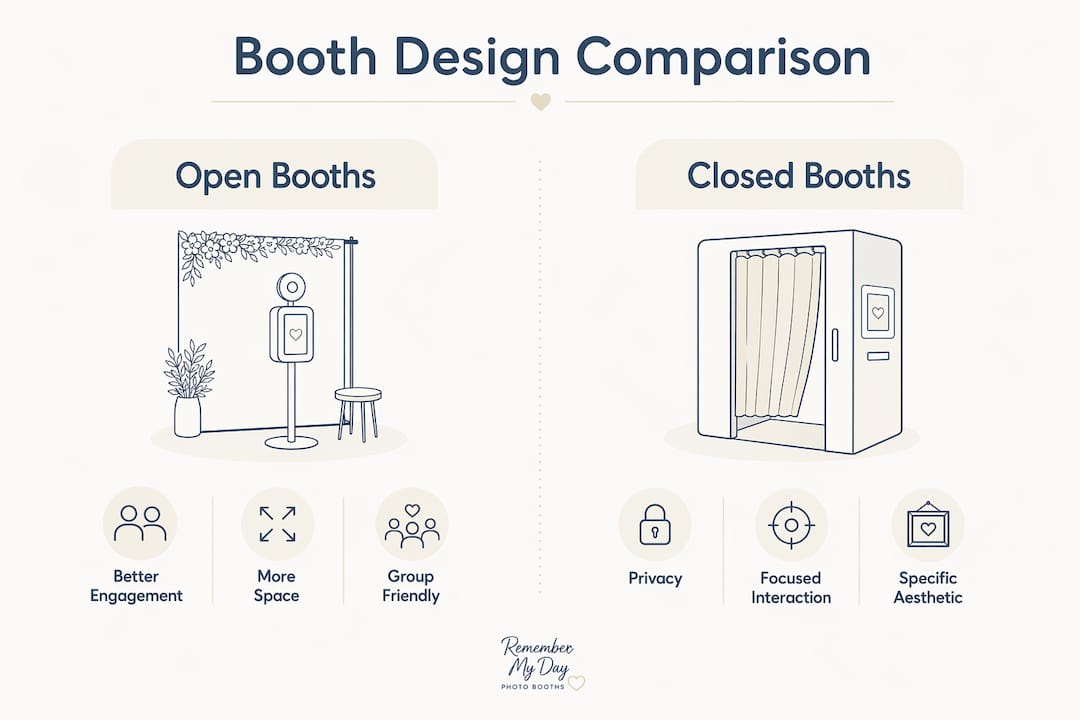
Open booths accommodate groups naturally. A wedding party of eight can gather around an open setup for a group photo without anyone being cut off or left outside. A closed booth typically fits two to four people, which limits the social energy that makes photo moments memorable. For corporate events and weddings alike, group participation is one of the strongest drivers of guest satisfaction.
Cost efficiency also favors open designs. Open booths are generally more cost-efficient and flexible than enclosed options, which tend to require larger footprints and higher rental costs. An open setup fits more guests comfortably in less square footage, which matters when venue space is limited or expensive.
Here is a quick comparison of the key differences:
- Accessibility. Open booths welcome all guests instantly. Closed booths create a threshold that some guests hesitate to cross.
- Group capacity. Open layouts handle large groups. Closed booths are built for small groups or individuals.
- Visibility. Open booths are visible from across the room, generating organic interest. Closed booths require guests to seek them out.
- Cost. Open setups typically cost less to rent and require less space to operate effectively.
- Atmosphere. Open booths feel social and celebratory. Closed booths feel private and contained, which suits specific use cases like glam portraits.
Closed booths still have a place. For events where privacy or a specific aesthetic matters, like a glam portrait session, a closed or semi-enclosed setup delivers something an open layout cannot. The key is matching the booth type to the event goal, not defaulting to one format for every occasion.
Key takeaways
Open concept booths deliver measurably better engagement, brand recall, and guest satisfaction than closed layouts because they remove barriers, invite groups, and create experiences guests actively want to participate in.
| Point | Details |
|---|---|
| Dwell time increases significantly | Open layouts boost visitor dwell time by 30–50% by removing physical and psychological barriers. |
| Brand recall jumps with hands-on interaction | Tactile, interactive open booths increase brand recall by up to 70% compared to passive displays. |
| Single focus prevents visual overload | Each open booth space should serve one clear purpose to avoid confusion and guest drop-off. |
| Staff positioning drives conversions | Team members stationed outside the booth threshold initiate more genuine conversations and better results. |
| Open booths suit most event types | From weddings to corporate events, open layouts outperform closed ones in accessibility, group capacity, and cost. |
What we have learned from watching guests at open booths
After working hundreds of events across San Antonio, we have watched the same thing happen over and over. Guests walk past a closed booth without a second glance. Then they stop at an open one, pull in three friends, and spend ten minutes laughing and taking photos. The difference is not the technology inside. It is the invitation the layout sends.
The biggest misconception we hear from event hosts is that open booths feel less polished or less professional. The opposite is true. A well-designed open booth signals confidence. It says, “We have nothing to hide, and we want you here.” That energy is contagious at any event.
We also see hosts make the mistake of over-staffing the booth interior. When your team crowds the space, guests feel like they are interrupting. Position one or two people just outside the entry, ready to welcome guests warmly, and the booth fills itself.
The “un-booth” trend is real, and it is not going away. Guests in 2026 want to feel something, not just see something. Open concept designs are the clearest path to creating those genuine “wow” moments that guests talk about long after the event ends. Focus on the experience first, and the engagement follows naturally.
— RMD
Open concept photo booth experiences from Rmdphotobooths
Rmdphotobooths brings open concept photo booth experiences to weddings, corporate events, and private celebrations across San Antonio. With over 1,000 five-star reviews, we know exactly how to design a booth that guests gravitate toward and treasure forever.

From 360° booths that put guests at the center of the action to AI-powered experiences that create one-of-a-kind keepsakes, every setup we offer is built for open, social, group-friendly interaction. Browse our full range of photo booth experiences to find the perfect fit for your event, or book your booth today and let us help you create moments your guests will treasure forever.
FAQ
What are open concept booths?
Open concept booths are event photo or display spaces designed without physical counters or enclosures, allowing guests to walk in freely from any direction. They prioritize accessibility, group participation, and spontaneous interaction over privacy or containment.
Why do open concept booths increase guest engagement?
Open layouts remove psychological barriers that make guests hesitant to approach, and they increase visitor dwell time by 30–50% compared to closed setups. Guests feel welcomed rather than cornered, which makes them stay longer and interact more.
Are open concept booths good for weddings?
Open concept booths are an excellent fit for weddings because they accommodate large groups, encourage spontaneous participation, and create a social, celebratory atmosphere. They also photograph beautifully, giving couples more dynamic and candid moments to remember.
How many people can use an open concept booth at once?
Open concept booths have no fixed capacity limit the way closed booths do. Groups of six, eight, or more can gather comfortably, which is one of the strongest open booth layout benefits for large celebrations.
Do open concept booths cost more than closed booths?
Open booths are generally more cost-efficient than enclosed options because they require less square footage and simpler structural components. For most event hosts, open designs deliver better guest engagement at a lower overall cost.