
TL;DR:
- Interactive booth experiences transform passive attendees into active participants and generate higher ROI at events. They increase qualified leads, dwell time, and brand recall while engaging visitors through multisensory interactions and well-designed zones. Proper planning, focused messaging, and combining technology with human touch are essential for maximizing post-show conversions.
Interactive booth experiences are immersive, multisensory engagement zones that transform passive event attendees into active participants, and they are the single most effective tool for driving measurable ROI at trade shows and corporate events. If you are an event planner weighing where to put your budget, the answer is clear: experiential booth designs deliver ROI ranging from 150% to 600% and generate three times more qualified leads than traditional passive booths. Understanding why invest in booth experiences goes far beyond aesthetics. It is about creating those “wow” moments that guests treasure forever, while delivering real business results you can measure and build on.
Why invest in booth experiences for measurable event ROI?
The numbers behind interactive booth investment are hard to ignore. Experiential elements now account for 35% of booth design budgets, up from 19% in 2023. That shift reflects what planners are learning firsthand: passive displays do not move people, and they do not move the needle on leads or conversions either.
The benefits of booth experiences show up most clearly in lead quality. Custom experiential stands generate 38% more qualified leads per square meter than generic shell-scheme booths, with 19% higher post-show conversion rates. Brand recall 72 hours after the event is 41% stronger for custom experiential booths. That means your brand stays in the conversation long after the show floor closes.
Dwell time is the metric that ties everything together. Interactive technologies like AR, VR, and gamification increase dwell time by 2.5x compared to non-interactive stands of the same size. Longer dwell time means more time for meaningful conversation, deeper qualification, and a stronger path to post-show conversion.
| Metric | Traditional booth | Experiential booth |
|---|---|---|
| Qualified leads per sq. meter | Baseline | +38% |
| Brand recall at 72 hours | Baseline | +41% |
| Post-show conversion rate | Baseline | +19% |
| Dwell time | Baseline | 2.5x longer |
| ROI range | Modest | 150%–600% |
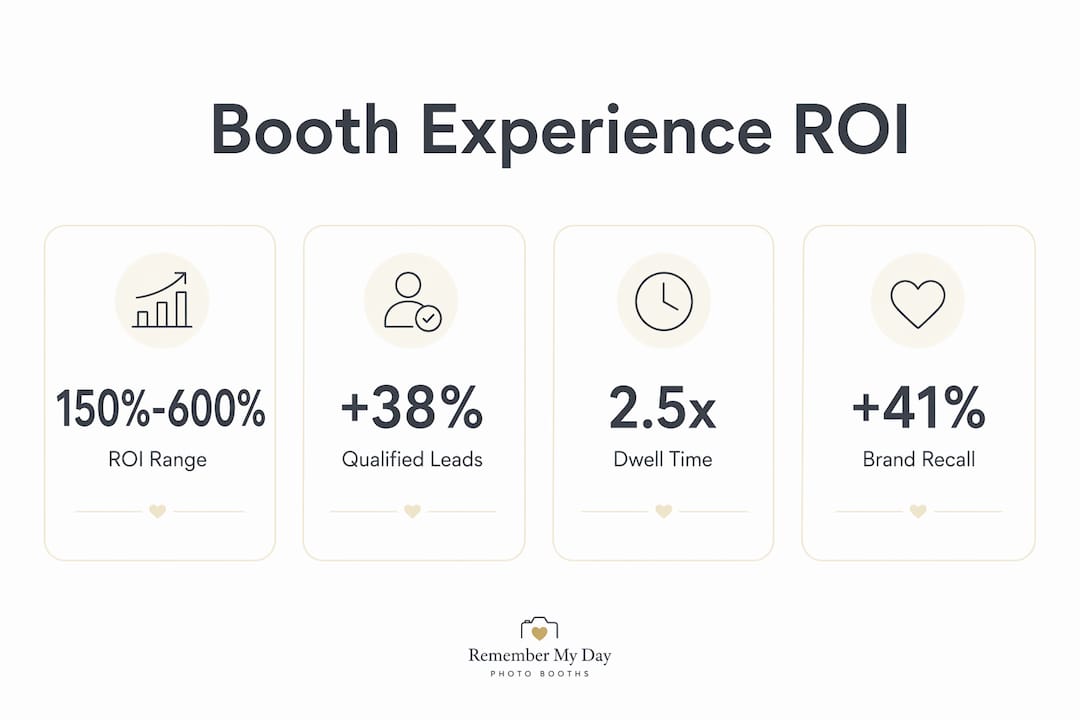
The table above makes the business case plain. Investing in event displays is not a luxury upgrade. It is the difference between a booth that collects business cards and one that builds a sales pipeline.
How do interactive booth designs engage attendees better?
The secret to maximizing booth engagement is turning visitors into participants. Physical interaction converts passive spectators into active participants, making brand experiences more memorable and increasing purchase likelihood. Multi-sensory activation creates multi-dimensional memories that digital ad exposure alone simply cannot replicate.
Great booth design works on four sensory levels at once: sight, sound, touch, and emotion. Here is how to put that into practice:
- Attract zone first. Place high-energy visual elements, motion graphics, or a 360° photo booth at the perimeter to pull people in from across the room. Stand design accounts for 52% of stop rate variance at trade shows, making it the single biggest driver of lead volume.
- Zone for conversation. Once visitors enter, guide them toward a quieter conversation area where staff can qualify leads and build relationships. Effective booths use zoning to move guests naturally from high-energy attract zones to focused conversation spaces.
- Use AR and VR with purpose. Augmented reality product demos and VR walkthroughs work best when they answer a specific visitor question, not just when they look impressive. Tie every tech element to a brand story or product benefit.
- Gamify the interaction. Spin-to-win activations, photo challenges, and leaderboard contests keep guests engaged longer and give them a reason to share the experience on social media.
- Keep your CTA singular and visible. One clear call to action per zone prevents decision fatigue and keeps visitors moving in the right direction.
The critical 3–7 second window determines whether a visitor decides to engage. A clear, focused visual message in that window is non-negotiable.
Pro Tip: Use vertical signage at 4–5 meters high for distant visibility, then switch to clean, minimalistic messaging at eye level. This combination reduces visual noise and draws visitors in from 20–30 meters away without overwhelming them up close.
What mistakes should event planners avoid with booth investments?
A busy booth is not automatically a successful booth. Quality of interactions matters more than sheer visitor volume. Planners who chase foot traffic without a qualification strategy end up with a pile of cold contacts and a disappointing post-show conversion rate.
The most common pitfalls that drain booth experience ROI include:
- Visual clutter. Too many messages, colors, and competing graphics confuse visitors and trigger fast exits. Excessive visual noise leads to visitor confusion and rapid booth exits. Pick one dominant visual theme and stick to it.
- Fragmented brand storytelling. When your AR demo, printed collateral, and staff talking points all tell different stories, visitors leave without a clear impression of who you are. Every touchpoint should reinforce the same core message.
- No visitor flow design. Booths without a clear entry point and guided path create bottlenecks and dead zones. Map the visitor journey before the event, not during setup.
- Untrained staff. Technology alone does not close leads. Trained, briefed stand teams increase qualified lead volume by 2–3x compared to relying on walk-in traffic alone. Staff who understand the booth’s goals and can pivot conversations toward qualification are your biggest multiplier.
- Starting prep too late. Pre-show preparation starting 90 days out significantly impacts event success. Booking vendors, briefing staff, and testing technology all take more time than planners expect.
Pro Tip: Run a 30-minute staff briefing the morning of the event. Cover the three key qualifying questions you want every visitor to answer, and assign one team member specifically to manage the interactive experience so it never sits idle.
How does investing in booth experiences drive post-show conversions?
The importance of trade show booths extends well beyond the event itself. A well-designed experiential booth creates authentic word-of-mouth and social sharing that keeps your brand visible for days or weeks after the show. Guests who take a photo at a 360° booth or complete a gamified challenge become organic brand ambassadors the moment they post online.
Integrating digital lead capture into interactive experiences enables precise lead qualification, lowers cost per acquisition, and improves follow-up success. When a visitor completes an AR demo and enters their contact details to receive their personalized results, you capture a warm lead with context. That context makes your follow-up email feel relevant rather than generic.
Long-form interactive booth formats achieve 2.2x higher brand recall and conversion than short passive ads. Attendees’ perceived value of an experience rises 63% with minimal effort invested on their part. That means even a low-friction interaction, like a quick photo booth moment or a touchscreen quiz, creates a memory strong enough to influence a purchase decision weeks later.
Post-show inbound inquiries are a direct result of booth experience quality. Planners who use photo booth data insights to track engagement patterns can identify which booth elements drove the most qualified conversations and replicate that success at the next event. Data turns a great experience into a repeatable system.
| Booth engagement action | Business KPI impact |
|---|---|
| AR or VR demo completion | Higher product understanding, faster sales cycle |
| Photo or video share on social media | Extended brand reach beyond event floor |
| Digital lead capture at interactive station | Warm, qualified prospect with follow-up context |
| Gamified challenge participation | Longer dwell time, stronger brand recall |
| Personalized takeaway (print, digital) | Post-event brand touchpoint, repeat engagement |
The advantages of interactive booths compound over time. Each event builds a richer data set, a stronger brand story, and a more refined activation strategy.
Key Takeaways
Investing in interactive booth experiences is the most direct path to higher lead quality, stronger brand recall, and measurable post-show conversions at any event.
| Point | Details |
|---|---|
| ROI is quantifiable | Experiential booths deliver 150%–600% ROI and 3x more qualified leads than passive setups. |
| Design drives stop rate | Stand design accounts for 52% of stop rate variance, making it the primary lead volume driver. |
| Dwell time converts | AR, VR, and gamification increase dwell time by 2.5x, directly improving post-show conversion rates. |
| Quality beats quantity | Trained staff and focused visitor flow produce 2–3x more qualified leads than walk-in traffic alone. |
| Data extends impact | Digital lead capture at interactive stations creates warm prospects and improves follow-up success. |
What we have learned from years of creating “wow” moments
After working across hundreds of events in San Antonio and beyond, we have seen one pattern repeat itself without fail: the booths that generate the most post-show business are never the biggest ones. They are the most intentional ones.
The planners who get the best results start with a single question: what do we want visitors to feel, do, and remember? Technology is a tool to answer that question, not the answer itself. A 360° booth or an AI photo activation works brilliantly when it is tied to a clear brand story. It falls flat when it is dropped into a space just because it looks impressive.
We have also learned that human interaction is irreplaceable. The most sophisticated interactive display still needs a warm, knowledgeable person standing nearby to turn curiosity into conversation. The best booth investments pair great technology with great people.
One more thing we believe strongly: measure everything. Track dwell time, lead capture volume, social shares, and post-show inquiry rates. The planners who iterate based on real data improve their booth experience ROI with every single event. Those who rely on gut feel alone leave a lot of value on the table.
— RMD
See how Rmdphotobooths brings these experiences to life
At Rmdphotobooths, we build the kind of interactive booth experiences that turn your event into a memory guests talk about for months. From 360° booths and AI-powered activations to glam booths and personalized photo experiences, every option is designed to maximize engagement and give you real, shareable moments.

We have earned over 1,000 five-star reviews by delivering experiences that spark joy and create genuine connections. Whether you are planning a corporate event, a wedding, or a large celebration in San Antonio, we would love to help you bring your vision to life. Book your experience today and let us create those unforgettable memories together.
FAQ
What is an interactive booth experience?
An interactive booth experience is an immersive activation that engages attendees through technology, physical participation, or multisensory design. Examples include 360° photo booths, AR product demos, gamified challenges, and personalized digital takeaways.
How much ROI can an experiential booth generate?
Experiential booth designs deliver ROI ranging from 150% to 600% and generate three times more qualified leads than traditional passive booths, according to industry research.
Why does booth design matter so much for lead generation?
Stand design accounts for 52% of stop rate variance at trade shows, making it the single biggest factor in how many visitors you attract. A well-designed booth pulls people in before a single conversation starts.
How do interactive booths improve post-show conversions?
Interactive booths increase dwell time by 2.5x and improve brand recall by 41% at 72 hours post-event. Both factors directly raise the likelihood that a visitor becomes a paying customer after the show.
When should event planners start preparing their booth strategy?
Pre-show preparation starting 90 days out significantly impacts event success. Early planning covers vendor booking, staff briefing, technology testing, and visitor flow design, all of which take more time than most planners expect.