TL;DR:
- Immersive booth experiences use multisensory design and interactive technology to fully engage guests. They drive higher brand recall, longer dwell times, and generate more qualified leads than traditional displays. Proper planning, storytelling, and digital follow-up extend the impact beyond the event.
An immersive booth experience is a deliberately designed, multi-sensory event space that transforms attendees from passive observers into active participants through interactive technology, spatial storytelling, and purposeful design. Unlike a traditional display, an immersive booth wraps guests in coordinated sights, sounds, and tactile moments that make them feel genuinely inside the brand’s world. Immersive booth designs now account for 35% of total booth design budgets, up from 19% in 2023. That shift signals a clear industry consensus: experiences outperform displays every time.
What is an immersive booth experience, exactly?
An immersive booth experience, known in the event industry as experiential booth design, is defined as a fully integrated environment where every element, from lighting to layout, serves a single goal: deep attendee engagement. Immersion, as a psychological state, means content absorbs a person’s visual, auditory, and tactile senses so completely that awareness of the medium fades. That is a much higher bar than simply adding a screen or a branded backdrop.
The difference shows up in results. Interactive immersive formats drive a 2.2x increase in brand recall and conversion rates compared to traditional passive setups. For event planners, that number means one thing: the booth you choose directly affects how well guests remember the brand, the event, and the moments they shared there.
Immersive booths work across every event type. A wedding photo booth with AR filters and a custom digital backdrop creates a personalized keepsake. A corporate event booth with a VR product demo turns a sales conversation into a hands-on story. A private party setup with dynamic lighting and live photo printing turns a corner of the room into the most talked-about spot of the night.
What features and technologies make a booth truly immersive?
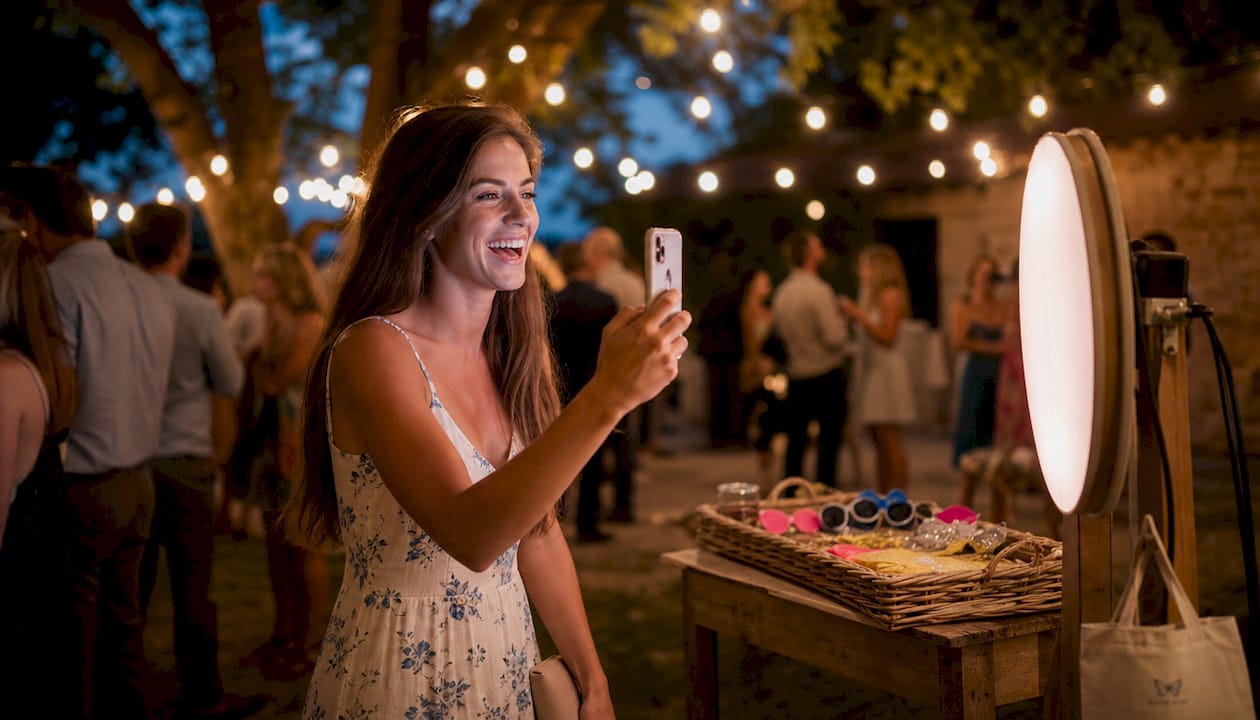
The core of any immersive booth is multisensory environmental design. Each sense receives a deliberate signal that reinforces the overall experience.
- Lighting: Dynamic LED arrays, color-matched to brand palettes or event themes, shift the emotional tone of a space instantly.
- Sound: Curated audio, from ambient music to directional sound effects, guides attention and sets mood without a single word.
- Texture and scent: Physical surfaces guests touch and subtle scents in the air anchor memory more reliably than visuals alone.
- Interactive technology: Augmented reality filters, touchscreen gamification, motion sensors, and VR demos give guests something to do, not just see.
- Phygital integration: Physical booth moments connect to digital follow-up, such as automated emails with shared photos, extending the experience well beyond the event itself.
Multisensory elements and phygital integration are now considered core components of high-performing booth design. The reason is simple: the more senses engaged, the stronger the memory formed.
Spatial choreography matters just as much as the technology. Designers plan deliberate visitor flow through attract, engage, and convert stages, creating a mini-narrative that guides guests naturally without crowding. Every square foot has a purpose.
Pro Tip: Align every technology choice with your event’s core message. A flashy VR headset that has nothing to do with the occasion creates confusion, not connection. Ask yourself: does this element tell the story, or just fill space?
How do immersive booths improve engagement and event ROI?
The business case for immersive booths is concrete. Brands using experience-driven booth designs report ROI between 150% and 600%, generating three times more qualified leads than standard exhibits. Those are not vanity numbers. They reflect the difference between a guest who glanced at a display and one who spent five minutes inside an experience they will describe to friends.
Measuring that difference requires the right metrics:
- Dwell time: How long a guest stays inside the booth, not just nearby.
- Qualified interaction minutes: Time spent actively engaging with a feature, not passively standing.
- Post-event sales influence: Purchases or bookings traced back to the booth interaction.
- Lead quality score: Depth of information captured and intent level of the guest.
High-performing booths prioritize dwell time and qualified interaction minutes over simple foot traffic. Foot traffic is a vanity metric. A booth that attracts 500 people for 10 seconds each loses to a booth that holds 50 people for five minutes each, every time.
Human connection amplifies all of it. Staff who adapt in real time to each guest’s energy and interest level turn a good experience into a great one. Capturing lead information naturally through the physical interaction itself, rather than forcing guests to fill out a form, keeps the experience fluid and the data quality high.
Pro Tip: Train your booth staff to read body language. A guest who lingers near a feature but does not engage is waiting for an invitation. One warm, specific prompt from a staff member can double their time inside the booth.
You can find more practical strategies in this guide on maximizing booth engagement at any event type.
How to design an immersive booth: practical steps
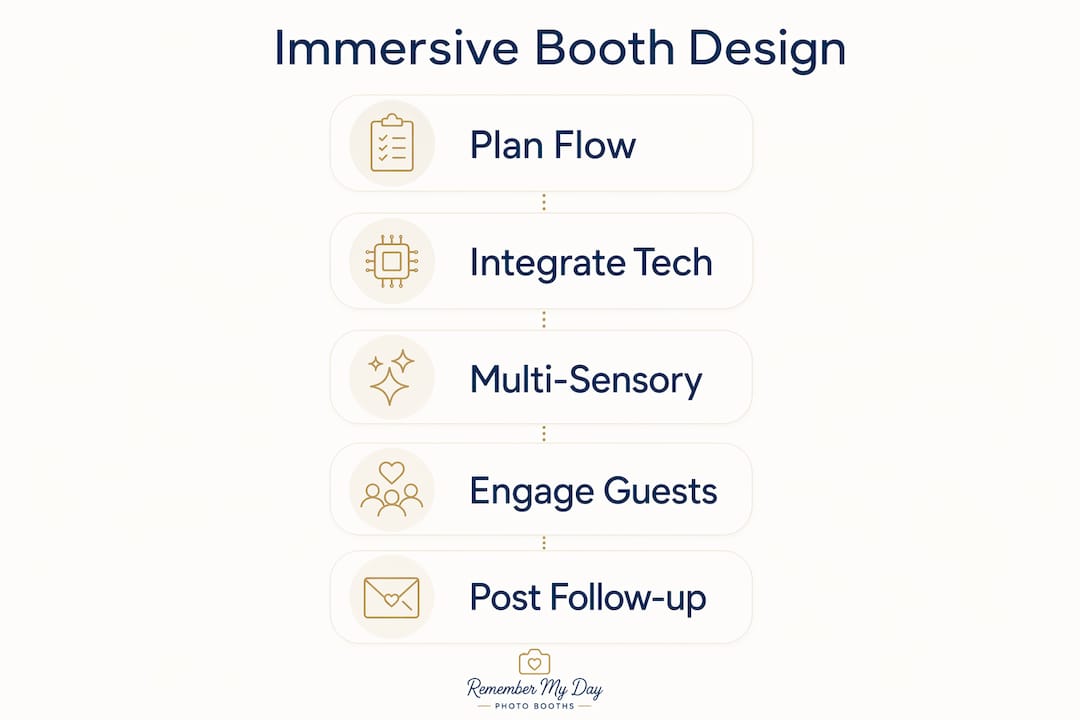
Designing an immersive booth starts with mapping the visitor journey across three clear phases.
- Attract: The booth must earn attention from a distance. Bold visuals, motion, and sound draw guests in before they consciously decide to approach. An open layout with no barriers at the entrance signals welcome, not gatekeeping.
- Engage: Once inside, guests need something to do within the first 15 seconds. A touchscreen prompt, a photo moment, or a live demo gives them an immediate reason to stay. This is where interactive booth features do their heaviest lifting.
- Convert: The final stage captures something of value, a photo, a contact, a memory, without disrupting the experience. A printed keepsake with a QR code, or a digital share that arrives in the guest’s inbox minutes later, extends the moment past the event itself.
Spatial choreography guides attendees through these stages by designing deliberate flow paths that avoid overcrowding and keep the narrative clear. Think of it as stage direction for a space rather than furniture arrangement.
Storytelling must run through every element. Strong brand storytelling happens when every visual, tactile, and auditory element aligns under a unified message. Fragmented experiences, where the lighting says luxury but the printout looks generic, break the spell and harm recall.
Common pitfalls to avoid: cluttered layouts that overwhelm guests, technology that requires too much instruction, and post-event silence with no digital follow-up. A phygital strategy that links the physical booth moment to a personalized digital touchpoint keeps the brand alive in the guest’s mind long after the event ends.
Pro Tip: Plan your post-event digital follow-up before the event, not after. Automated photo delivery emails, personalized thank-you messages, and social sharing prompts should be ready to trigger the moment a guest interacts with the booth.
Immersive booth ideas for weddings, corporate events, and private parties
Immersive booth experiences look different depending on the event, but the principles stay the same: engage the senses, invite participation, and create a moment worth sharing.
- Weddings: Interactive backdrops with AR filters let guests step into a custom scene that matches the couple’s theme. Dynamic lighting shifts from ceremony gold to reception color as the night progresses. A personalized photo booth experience with custom print templates gives every guest a keepsake tied to the specific day.
- Corporate events: VR product demos place attendees inside a brand story rather than in front of a slide deck. Branded touchscreen gamification collects lead data while guests compete for prizes. A 360° photo booth creates shareable slow-motion video content that carries the brand’s message across social media long after the event closes.
- Private parties: Themed sound environments and color-reactive lighting turn a standard venue corner into a destination. Selfie stations with live photo printing and social media integration let guests share moments instantly. Cross-device engagement, where guests receive a digital gallery link on their phones within minutes, extends the party feeling into the next day.
Interactive booths with touchscreen gamification, VR demos, and photogenic moments generate substantially better lead quality and lasting impressions than passive displays. For private events, “lead quality” simply means how deeply guests connect with the experience and how often they talk about it afterward.
Scale your choices to your audience. A 50-person wedding needs a different footprint than a 500-person corporate conference. The technology should fit the space, not the other way around. Exploring modern booth designs built for different event scales can help you match the right format to your specific occasion.
Understanding how immersive engagement works in live event settings across different experience categories can also sharpen your instincts for what makes a moment truly memorable.
Key Takeaways
Immersive booth experiences outperform traditional displays because they engage multiple senses, guide guests through a deliberate journey, and extend brand impact well beyond the event itself.
| Point | Details |
|---|---|
| Immersion requires all senses | Effective booths coordinate lighting, sound, texture, and interactivity under one unified message. |
| Metrics that matter | Measure dwell time and qualified interaction minutes, not just foot traffic, to prove real ROI. |
| Design in three phases | Map the Attract, Engage, and Convert stages before choosing any technology or layout. |
| Phygital follow-up multiplies impact | Connect physical booth moments to digital touchpoints like photo emails to extend the experience. |
| Scale to your audience | Match booth complexity and footprint to event size and guest expectations for the best results. |
What we have learned after 1,000+ events
The booths that guests remember longest are rarely the most expensive ones. They are the ones that made guests feel something specific: seen, surprised, or genuinely delighted. We have watched guests walk past elaborate displays to crowd around a well-placed, thoughtfully designed photo moment because it felt personal and fun rather than corporate and polished.
The shift happening right now in event design is moving away from spectacle toward what I would call micro-environments. Smaller, more intentional spaces that create one strong emotional beat tend to outperform large, multi-feature setups that try to do everything at once. Attendee expectations have risen. Guests arrive at events having already experienced high-quality digital content every day. A booth has to offer something they genuinely cannot get on their phone.
Sustainability is also entering the conversation. Planners are asking how to create memorable experiences without excessive physical waste. Digital keepsakes, reusable modular structures, and energy-efficient lighting are not just good ethics. They are increasingly what clients request.
The best advice we can offer is this: start with the feeling you want guests to walk away with, then build backward to the technology and design that creates it. A clear emotional goal produces a coherent booth. A technology shopping list produces a cluttered one.
— RMD
Rmdphotobooths brings immersive experiences to your event
We love helping event planners and hosts create those “wow” moments that guests talk about for years. At Rmdphotobooths, we offer a full range of immersive photo booth experiences designed for weddings, corporate events, and private parties across San Antonio. From 360° video booths and AI-powered portrait stations to glam setups and robot photo booths, every option is built to engage, delight, and give your guests something to treasure forever.

Our team handles setup, staffing, and post-event digital delivery so you can focus on your guests. With over 1,000 five-star reviews, we know what makes a booth experience genuinely unforgettable. Ready to bring your vision to life? Book your booth and let’s make your celebration truly shine.
FAQ
What is an immersive booth experience?
An immersive booth experience is a multi-sensory event space designed to fully engage attendees through interactive technology, coordinated lighting, sound, and spatial storytelling. It transforms guests from passive observers into active participants who form strong emotional memories.
How do immersive booths differ from traditional photo booths?
Traditional photo booths capture a single moment. Immersive booths create an entire environment around that moment, using AR filters, dynamic lighting, themed backdrops, and digital follow-up to deepen the guest experience before, during, and after the photo is taken.
What types of immersive experiences work best for weddings?
Personalized AR filters, custom print templates, and interactive backdrops tied to the wedding theme work especially well. A 360° video booth also creates shareable content that extends the celebration across social media.
How do you measure the success of an immersive booth?
Measure dwell time, qualified interaction minutes, and post-event digital engagement rather than simple foot traffic. These metrics directly correlate with stronger brand recall and higher-quality guest connections.
Are immersive booths worth the investment for private parties?
Yes. Interactive booths with live photo printing, social sharing, and themed environments generate stronger guest engagement and more memorable moments than standard setups, making them a high-value addition to any private celebration.