TL;DR:
- Modern photo kiosks are versatile tools that enhance event branding, social sharing, and data collection, moving beyond simple photo keepsakes. They are self-service stations equipped with touchscreens, instant printers, and social sharing features that increase guest engagement and digital reach. Proper placement, promotion, and customization are essential for maximizing their impact and delivering measurable marketing and attendee benefits.
Most event planners think of photo kiosks the same way they think of a candy bar: a nice treat, not a necessity. That framing is costing you real value. The role of photo kiosks in events has expanded well beyond handing guests a printed keepsake. Today, these stations function as branding tools, social amplifiers, lead capture systems, and conversation starters all wrapped into one compact setup. Whether you are planning a corporate summit, a wedding reception, or a large festival, understanding what modern photo kiosks can actually do will change how you budget, design, and measure your events.
Table of Contents
- Key takeaways
- What modern photo kiosks actually do
- How photo kiosks enhance events for guests
- Marketing and data benefits for event organizers
- Photo kiosks vs. traditional photo booths and other options
- Best practices for deploying photo kiosks at your event
- My take on why photo kiosks are underused
- Bring your event to life with Rmdphotobooths
- FAQ
Key takeaways
| Point | Details |
|---|---|
| Beyond entertainment | Photo kiosks serve as branding, data collection, and social marketing tools, not just fun additions. |
| Social amplification | Instant sharing features turn every guest photo into organic reach through branded hashtags and overlays. |
| Data capture opportunity | Kiosk software collects attendee contact info and usage analytics to fuel post-event marketing. |
| Placement drives participation | Location and promotion are the two biggest factors in whether guests actually use your kiosk. |
| Customization multiplies impact | Branded overlays, AR effects, and themed filters make kiosks feel native to your event rather than generic. |
What modern photo kiosks actually do
The term “photo kiosk” gets used loosely, so let’s be precise. A photo kiosk is a self-service station that captures, processes, and delivers photos to guests with little to no staff involvement. It is distinguished from a staffed photo booth by its unattended operation model. Early versions were little more than a camera on a stand with a printer. What exists today is a different category entirely.
Modern kiosks are built around touchscreen interfaces, DSLR or mirrorless cameras, dye-sublimation printers for instant physical prints, and software layers that control the entire guest flow. Technology advances in photo booths have introduced augmented reality filters, animated GIF creation, short video clips, and AI-generated image styles that guests can apply in real time.
Key features you should expect from any current-generation kiosk include:
- Touchscreen interface for intuitive, staff-free guest navigation
- Branded overlays and digital frames that display logos, event names, or sponsor graphics on every image
- Instant printing powered by dye-sublimation technology, which drives demand for photo kiosks through 2035 due to speed and print durability
- Social sharing workflows via QR code, SMS, and email delivery
- AR effects and location-specific filters for personalized, on-brand experiences
- Unattended operation mode with automated prompts, countdown timers, and retry flows
Fujifilm’s instax SPOT photobooth, for example, combines wireless smartphone printing with AR effects and branded overlays, giving venues a fully self-contained social hub without a single attendant on-site. That is the direction the entire category is moving.
Pro Tip: Ask your kiosk vendor to walk you through the full guest flow before your event. The number of taps it takes to get from “start” to “shared photo” directly affects how many guests complete the experience.
How photo kiosks enhance events for guests
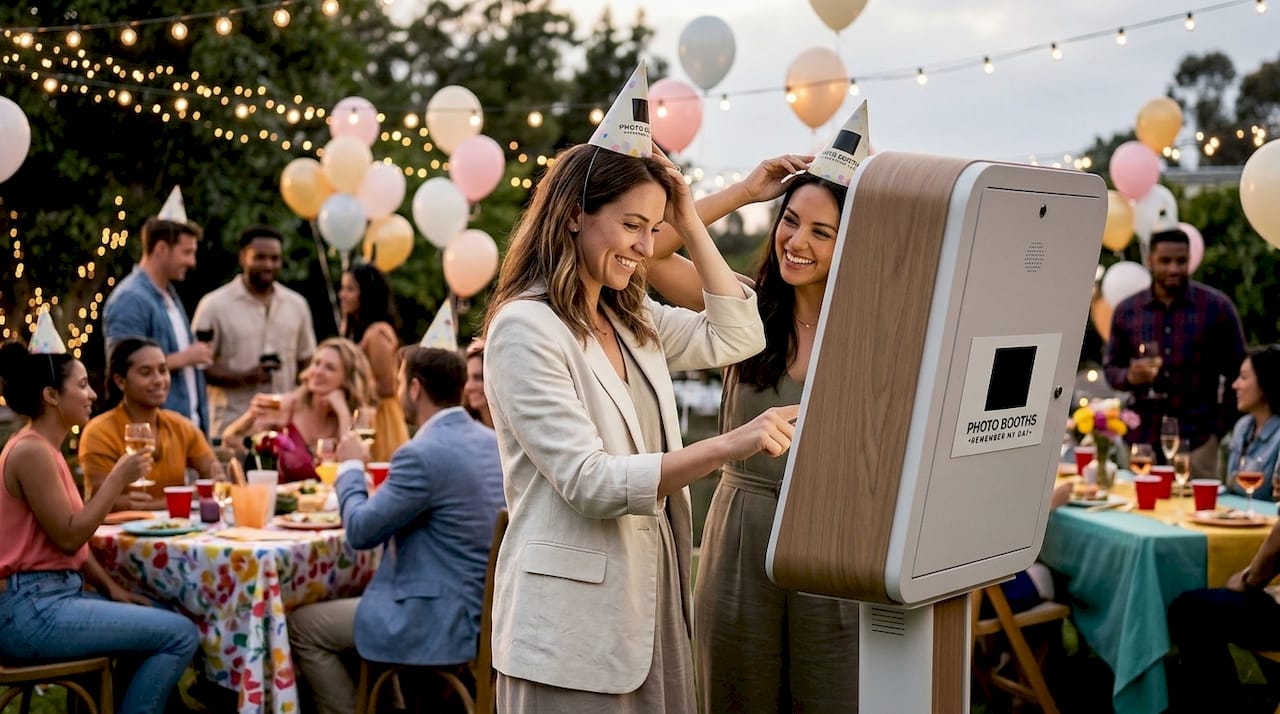
Here is what actually happens when you place a well-configured photo kiosk at an event. Guests arrive, scan the room, and immediately see a visually appealing station with lights, props, and a screen showing example photos. That visual cue does something that most other engagement tools cannot: it removes the social awkwardness of not knowing what to do. Photo kiosks act as natural icebreakers, giving guests a shared activity and a reason to gather.
Photo kiosks boost social sharing at events by enabling quick branded photo capture followed by immediate posting to social platforms. Every time a guest shares a photo tagged with your event hashtag, your event reaches people who were never in the room. For corporate events, that is organic brand exposure. For weddings, it is a living, real-time photo album your entire network can see.
Consider how this plays out across different event types:
- Corporate conferences: Attendees take branded photos at networking breaks, post them with the company hashtag, and extend the event’s digital footprint without any marketing effort from you.
- Weddings: Guests capture candid moments throughout the reception, and the couple receives a digital gallery of guest photos in addition to their professional photographer’s work.
- Festivals and public events: High-volume foot traffic means a single kiosk can generate hundreds of branded social posts in a single day, all featuring the event’s visual identity.
- Product launches: Customizable photo kiosks allow brands to place product imagery, taglines, and color schemes directly into every guest photo, turning attendees into brand ambassadors.
Branded content generates up to 85% brand recall for events that deploy photo booths with proper branding. That number should stop every marketing-minded planner in their tracks. No banner ad or branded tote bag comes close to that level of memorability.
Marketing and data benefits for event organizers
This is where the importance of photo kiosks goes from “nice to have” to genuinely strategic. Every interaction a guest has with a kiosk is a data point. When guests enter their email to receive a digital copy, or type in their phone number for an SMS delivery, they are voluntarily providing contact information inside a positive, consent-based experience.
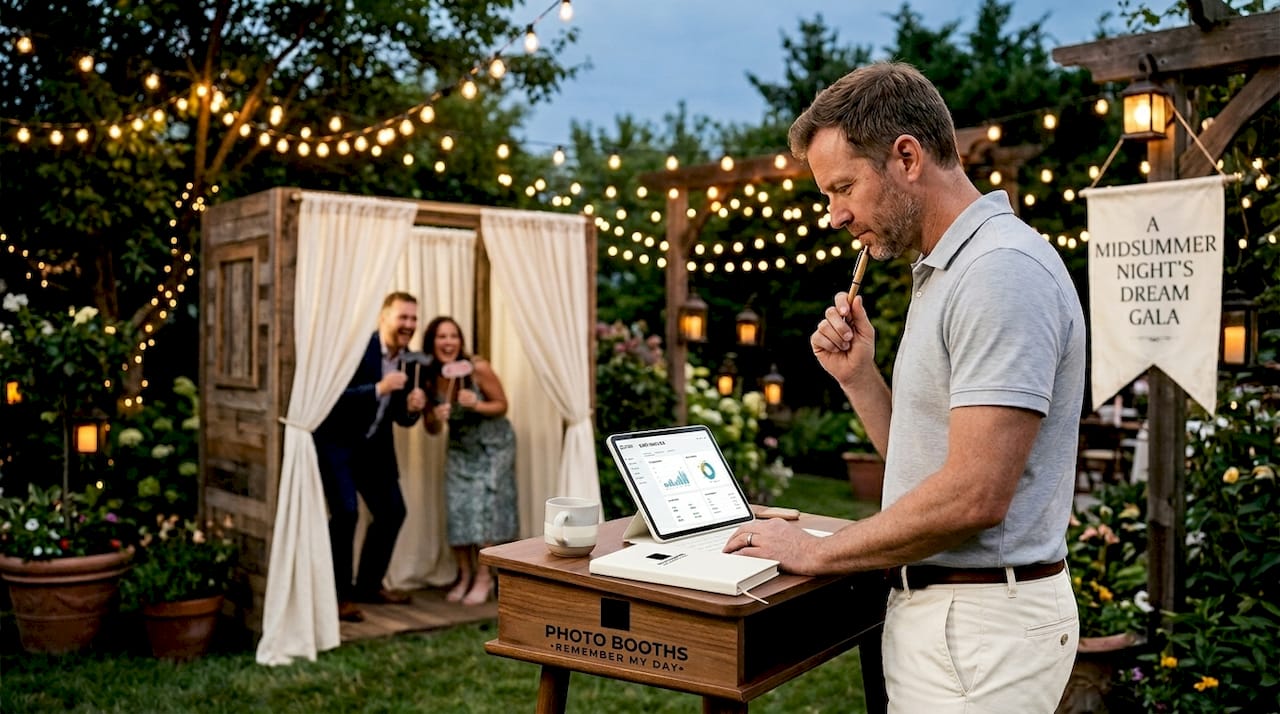
Kiosk software captures lead data and peak usage analytics that event marketers can use immediately after an event closes. You can see which hours had the highest photo volume, which overlay designs guests chose most often, and how many total social shares your event generated. That data feeds directly into post-event email campaigns, sponsor reports, and future event planning.
Here is a side-by-side look at what photo kiosks deliver versus what most event organizers expect:
| Feature | What organizers expect | What kiosks actually deliver |
|---|---|---|
| Guest entertainment | Fun photos for keepsakes | Branded social posts, icebreaking activity, shared experience |
| Marketing impact | Minimal | Organic reach via hashtags, up to 85% brand recall |
| Data collection | None | Email/SMS capture, usage analytics, social share counts |
| Sponsorship value | Logo on a banner | Sponsor branding on every printed and digital photo |
| Post-event ROI | Hard to measure | Trackable through share counts, downloads, and lead lists |
Photo booth software frameworks enable automated workflows with instant digital sharing and data capture that event teams can pull immediately after the event. Some vendors even offer real-time dashboards you can monitor from your phone while the event is running.
Pro Tip: Build your email capture prompt into the digital delivery flow rather than a separate opt-in form. Guests who want their photos are far more likely to provide accurate contact information when it is tied to receiving something they already want.
Photo kiosks vs. traditional photo booths and other options
Knowing when to choose a photo kiosk over a traditional photo booth or another engagement tool saves you money and improves guest experience. The differences matter more than most planners realize.
| Factor | Photo kiosk | Traditional photo booth | Video/interactive screen |
|---|---|---|---|
| Staff required | No (self-service) | Often yes | Varies |
| Setup footprint | Small to medium | Medium to large | Medium |
| Throughput | High (quick solo or group shots) | Moderate (seated, slower flow) | High but impersonal |
| Physical print | Yes | Yes | Rarely |
| Social sharing | Built-in | Add-on feature | Depends on vendor |
| Branding options | Overlays, AR, filters | Backdrops, props, overlays | Screen graphics only |
| Cost | Moderate | Moderate to high | High |
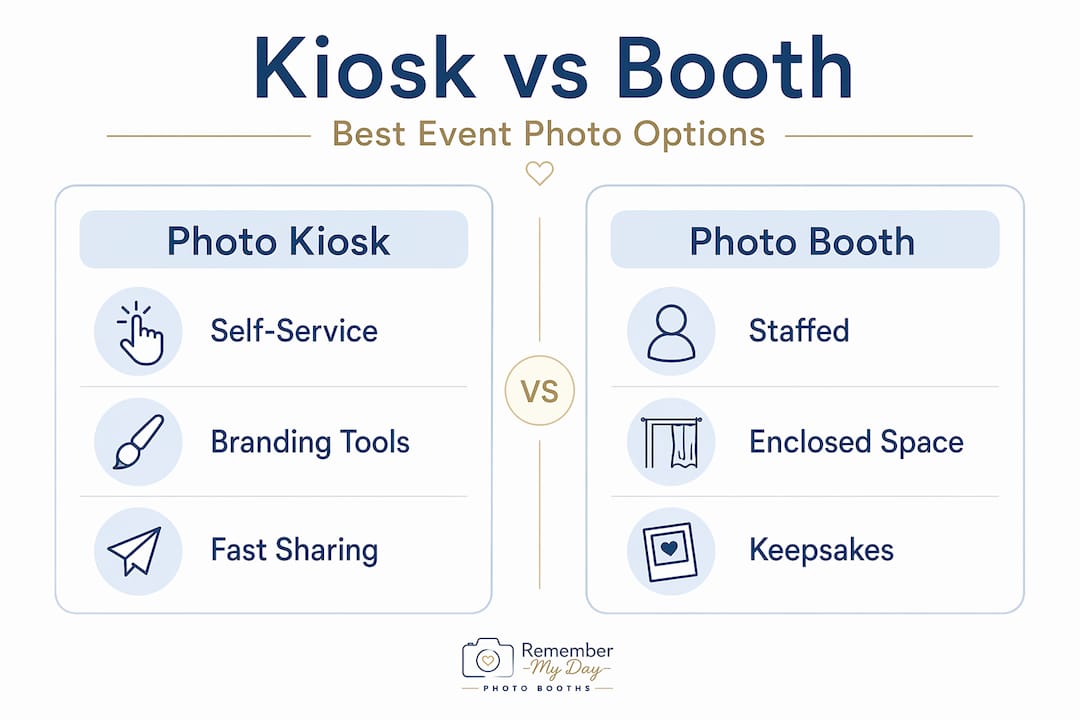
Traditional photo booths create an enclosed, intimate experience that works beautifully for weddings and formal galas. Exploring personalized photo booth experiences shows how branding and customization work in both formats. Photo kiosks, by contrast, are open-air, faster, and built for higher volume events where you need to move a lot of guests through quickly.
Video booths and interactive screens have their place at experiential marketing activations, but they rarely produce the physical takeaway that guests actually treasure. There is something about holding a printed photo that no digital-only experience replicates. Instant photo printing demand is growing precisely because guests still want something tangible to take home.
The right choice comes down to your event’s goals. If you need data capture and social reach, a photo kiosk wins. If you need intimate, theatrical moments, a traditional booth may serve your guests better. Many of the best events use both.
Best practices for deploying photo kiosks at your event
Getting a kiosk in the room is only half the job. Getting guests to actually use it requires smart placement, promotion, and setup. Effective photo booth setup depends on these fundamentals, and skipping any of them noticeably reduces participation.
- Place kiosks on the path of natural foot traffic, not in corners or against back walls. The entrance area, near the bar, or adjacent to the food station are all high-visibility locations.
- Light the kiosk well. Ring lights and LED setups are not just decorative. They produce better photos, which means guests are more likely to share them.
- Promote before the event. Include a mention in your event invitation or pre-event email so guests arrive already knowing the kiosk is there. Guests who anticipate the experience participate at much higher rates.
- Use on-site signage with simple instructions and your event hashtag printed clearly above the station.
- Customize the overlay before the event, not on setup day. Test the full guest flow including print, digital delivery, and social sharing while you still have time to fix issues.
- Assign one point of contact to check on the kiosk periodically even if it runs unattended. Printers run out of paper. Props fall off tables.
The benefits of photo kiosks only materialize when guests participate. Everything in your deployment plan should serve that one goal.
My take on why photo kiosks are underused
I’ve worked with event planners across hundreds of events, from intimate 50-person celebrations to multi-day corporate conferences. What I’ve seen consistently is that photo kiosks get booked late, placed poorly, and promoted not at all. Planners treat them as a vendor add-on rather than a core engagement element.
That is a real miss. In my experience, when a kiosk is placed well and promoted properly, it becomes the most-talked-about element of the event. Not the food. Not the speaker. The photo station. And yet most planners I’ve spoken with budget more for centerpieces than for the one experience their guests will actually take home.
What I’ve also learned is that photo kiosks are best viewed as scalable, unattended engagement platforms with genuine software depth, not party accessories. The gap between what these tools can do and what most planners ask them to do is wide. Close that gap by treating your kiosk vendor as a strategic partner, not a rental transaction. Ask about data exports. Ask about branded overlays. Ask how the sharing flow works on mobile. The answers will tell you everything about whether you are getting real value or just a camera on a stick.
— RMD
Bring your event to life with Rmdphotobooths
At Rmdphotobooths, we have spent years helping event organizers in San Antonio and beyond turn photo kiosks into genuine memory-makers. Our lineup of photo booth and kiosk experiences includes traditional booths, 360° booths, glam booths, AI-powered portrait stations, and fully customizable open-air kiosk setups built for high-volume events.

Every setup we deliver includes custom branded overlays, social sharing integration, and professional support from booking through breakdown. We make it easy to get started, and our online booking platform lets you check availability, customize your experience, and lock in your date in minutes. With over 1,000 five-star reviews, we know what it takes to create those “wow” moments your guests will treasure forever. Let’s make your next event truly shine.
FAQ
What is the role of photo kiosks in events?
Photo kiosks serve as self-service engagement stations that capture branded photos, enable instant printing, and drive social sharing. Beyond entertainment, they function as marketing tools, data collection points, and event atmosphere builders.
How do photo kiosks enhance guest experience?
Photo kiosks act as icebreakers, create shareable moments, and give guests a physical or digital keepsake. Social sharing at events is amplified when kiosks offer instant posting with branded hashtags and overlays.
What data can a photo kiosk collect at an event?
Kiosk software captures email addresses, phone numbers, usage frequency, and social share counts during the photo delivery flow. This data supports post-event email campaigns and helps sponsors quantify their brand exposure.
How are photo kiosks different from traditional photo booths?
Photo kiosks are open-air, self-service, and optimized for high-volume throughput with built-in social sharing. Traditional photo booths offer a more enclosed, intimate experience and typically require a staff attendant.
Where should a photo kiosk be placed at an event?
Place your kiosk near high-traffic areas like the entrance, bar, or food station, and make sure it is well-lit and clearly signed. Poor placement and lack of promotion are the two leading reasons guests skip the kiosk entirely.